






Cloud Computing is a technology model that allows access to computing resources over the Internet instead of investing in on-premises IT infrastructure. This article helps you understand the features, types, service models, and benefits of cloud computing.
High-Speed Proxy - Ready to Try?
ALGO Proxy offers residential, datacenter & 4G proxies in 195+ countries
What is Cloud Computing?

Cloud Computing is a technology model that enables access to and use of computing resources — servers, storage, databases, networking, software — over the Internet. Instead of installing and maintaining hardware on-premises, users rent resources from Cloud Service Providers (CSPs) and pay based on usage.
The concept of cloud computing emerged in the late 1960s but truly took off in 2006 with the launch of Amazon Web Services (AWS). Today, major providers including AWS, Google Cloud Platform, and Microsoft Azure dominate the global market.
Benefits of Cloud Computing

Cost Savings: No upfront hardware investment, pay only for resources used (pay-as-you-go). Reduced maintenance, energy, and staffing costs.
Flexible Scaling: Rapidly increase or decrease resources based on actual demand. Ideal for businesses with variable traffic (e-commerce during holidays, events...).
Access Anywhere: Data and applications accessible from any device with Internet, supporting remote work and effective team collaboration.
High Availability: Globally distributed data centers, automatic backups, 99.9%+ uptime commitment. Minimizes disruption risks from hardware failures or natural disasters.
Professional Security: Data encryption, access management, compliance with ISO 27001, SOC 2, GDPR. Continuous security updates.
Access to New Technologies: AI, Machine Learning, Big Data, IoT — all available as services without specialized infrastructure investment.
Types of Cloud Computing

| Type | Description | Best For |
|---|---|---|
| Public Cloud | Shared resources managed by CSP (AWS, Azure, GCP) | Startups, SMEs, web apps |
| Private Cloud | Dedicated infrastructure for one organization | Banking, government, healthcare |
| Hybrid Cloud | Combines Public + Private, sensitive data stays private | Large enterprises, fintech |
| Community Cloud | Shared among organizations in the same industry | Education, research, healthcare |
Public Cloud is the most popular choice thanks to low cost and easy deployment. Private Cloud suits businesses needing strict security compliance. Hybrid Cloud combines advantages of both, allowing flexible workloads between public and private environments.
Service Models

IaaS (Infrastructure as a Service): Provides basic infrastructure — virtual servers, storage, networking, OS. Users have full control over configuration and management. Examples: AWS EC2, Google Compute Engine, Azure Virtual Machines.
PaaS (Platform as a Service): Provides development platform — OS, runtime, databases, CI/CD tools. Developers focus on code without managing infrastructure. Examples: Google App Engine, Heroku, Azure App Service.
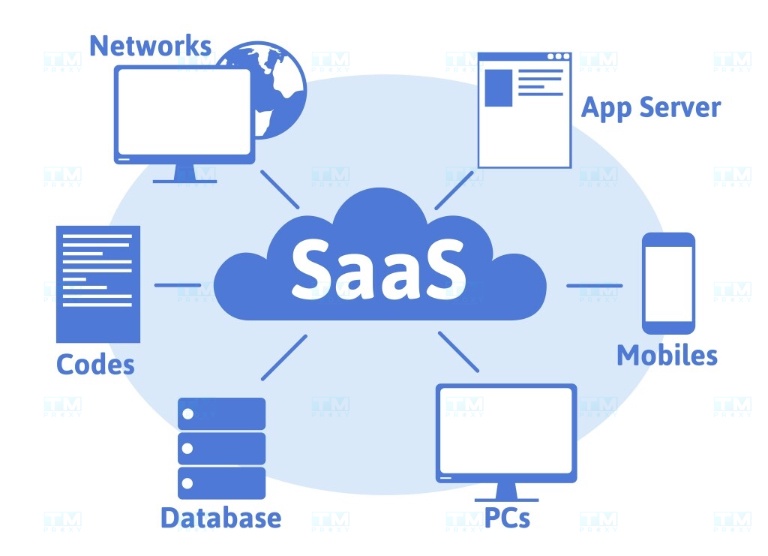
SaaS (Software as a Service): Provides complete software via browser or app. Users simply sign up and use, no installation or maintenance required. Examples: Google Workspace, Microsoft 365, Salesforce, Slack.
| Criteria | IaaS | PaaS | SaaS |
|---|---|---|---|
| Infrastructure Management | User | CSP | CSP |
| Application Management | User | User | CSP |
| Flexibility | Highest | Medium | Lowest |
| Complexity | High | Medium | Low |
| Target Users | DevOps, SysAdmin | Developer | End user |
Real-World Applications
- Storage and Sharing: Google Drive, Dropbox, OneDrive — store documents, photos, videos accessible anywhere.
- Email and Collaboration: Gmail, Outlook, Google Workspace, Microsoft Teams — email, calendar, video meetings.
- Enterprise Management: Cloud ERP, CRM (Salesforce, SAP Cloud) for customer, finance, and HR management.
- AI and Machine Learning: AWS SageMaker, Google AI Platform, Azure ML — build AI models without dedicated GPUs.
- Streaming and Entertainment: Netflix, Spotify, YouTube — global content distribution powered by cloud infrastructure.
- Healthcare: Patient record storage, remote diagnostics, large-scale medical data analysis.
- Education: Google Classroom, Zoom, Moodle — online learning platforms, exams, and class management.
Conclusion: Cloud computing is an essential technology foundation for modern businesses, offering cost savings, flexible scaling, and access to advanced technologies. Choosing the right service model and cloud type is key to maximizing benefits.