





You do not operate in a vacuum. Every decision about price, content or product happens next to competitors fighting for the same customers. Competitor analysis is how you see the playing field clearly and make the right move — instead of guessing.
What is competitor analysis?
High-Speed Proxy - Ready to Try?
ALGO Proxy offers residential, datacenter & 4G proxies in 195+ countries
Competitor analysis is the process of collecting, evaluating and comparing information about rivals in the same market: what they sell, how they price, how they communicate, whether customers love or dislike them, and how much share of discussion they own. The ultimate goal is not to "know about competitors" but to find opportunities for yourself: gaps they leave open, weaknesses they haven't fixed, and winning strategies you can learn from.
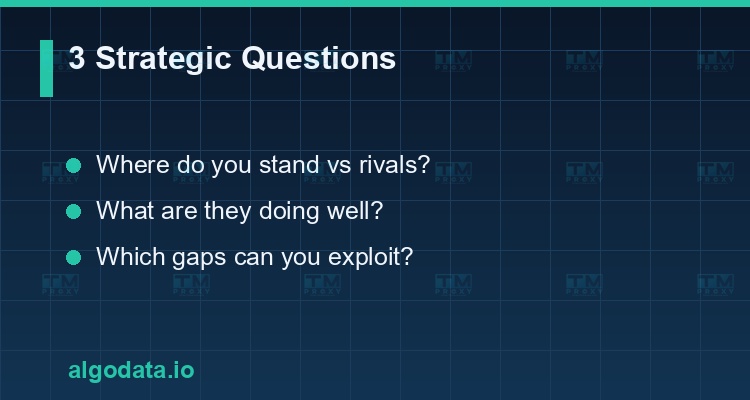
Competitor analysis answers three strategic questions:
- Where do you stand versus competitors in share, awareness and customer affinity?
- What are competitors doing effectively — and where are their weaknesses?
- What opportunities can you exploit that competitors haven't claimed?
In short, competitor analysis turns knowledge about rivals into an action advantage — not a report to admire. Unlike plain "competitor monitoring" (just recording what they do), competitor analysis goes further: it compares you against them, explains why a strategy works, and points to your next move. A business that does this well decides faster and errs less, because every choice about price, content or product rests on real data about the playing field rather than gut feeling. Skip it, and you are always reacting late — learning the news only after market share has already shifted to someone else.
Four types of competitors to analyze
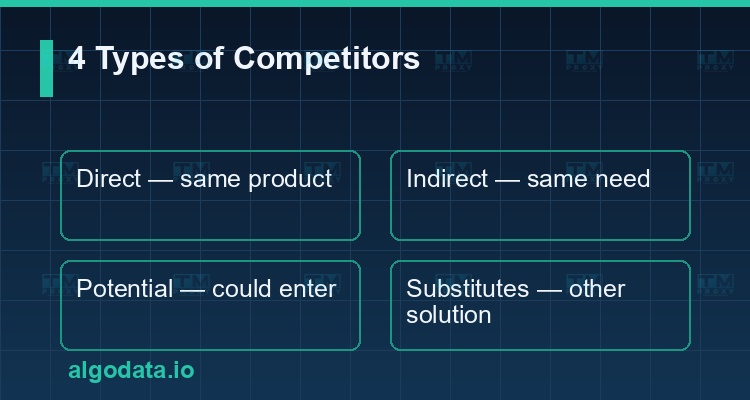
Before analyzing, identify the right competitors — many businesses only look at direct rivals and miss other threats:
- Direct competitors — same product, same customers (e.g. two proxy brands both selling to the MMO crowd).
- Indirect competitors — a different solution that meets the same need.
- Potential competitors — not competing directly yet but could jump in (new startups, big players expanding).
- Substitutes — another way for customers to solve the problem without anyone's product in the category.
Analyzing all four keeps you from being surprised by a threat outside your "familiar competitor list."
What does competitor analysis include?
A full competitor analysis spans several dimensions:
- Product & pricing — catalog, features, price points, packages.
- Positioning & messaging — how they describe themselves, which pain points they target.
- Content & SEO — which keywords they rank for, what topics they write about, how often.
- Share of Voice (SoV) — their share of social discussion versus yours.
- Sentiment — whether customers speak positively or negatively about them, and why.
- Channels & ads — where they advertise, which platforms they're present on.
- Strengths / weaknesses (SWOT) — synthesized into a decision-ready picture.
What sets modern competitor analysis apart is that most of this data is public on social media and the internet — if you know how to collect and read it.
A 6-step competitor analysis process
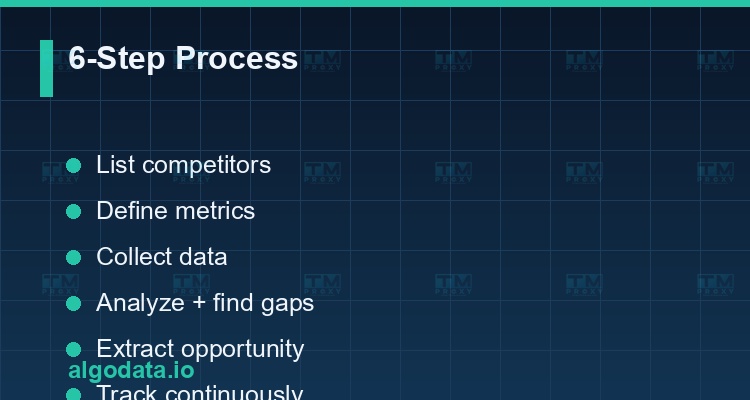
- List your competitors — all four types above, not just familiar names.
- Define metrics to track — SoV, sentiment, price, content frequency, engagement.
- Collect data — from websites, social media, e-commerce platforms, customer reviews.
- Analyze & compare — place your numbers next to competitors' and find the gaps.
- Extract insight & opportunity — where are the gaps and weaknesses to attack.
- Track continuously — competitors change weekly; analyzing once and forgetting is useless.
Competitor analysis on social media (social competitive intelligence)
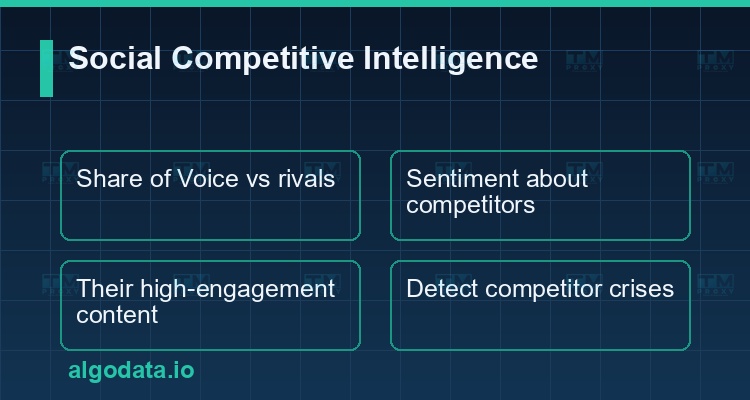
Social media reveals the most about competitors — because their own customers are talking. How to analyze competitors on social media:
- Measure Share of Voice — what percentage of industry discussion competitors own versus you.
- Analyze sentiment about competitors — what customers praise or criticize; the criticism is your opportunity.
- Track high-engagement content — which of their posts go viral, which formats work.
- Detect competitor crises — and the lessons to avoid them yourself.
This is nearly impossible to do manually across thousands of mentions a day — which is where a social listening tool comes in.
What social listening is and its role in competitor analysis
Analyzing competitors on TikTok and Shopee
The two most fiercely competitive platforms in Vietnam right now are TikTok and Shopee — and also where competitor data is richest:
- TikTok competitor analysis — which of their videos go viral, which hashtags they use, which KOLs they partner with, how their channel grows.
- Shopee competitor analysis — best-selling products, pricing strategy, customer reviews, the keywords they optimize.
This is data that leads directly to action: knowing what sells for competitors, you adjust your catalog; knowing what they're criticized for, you improve in the right place.
Competitor analysis tools — what can Algo Data do?
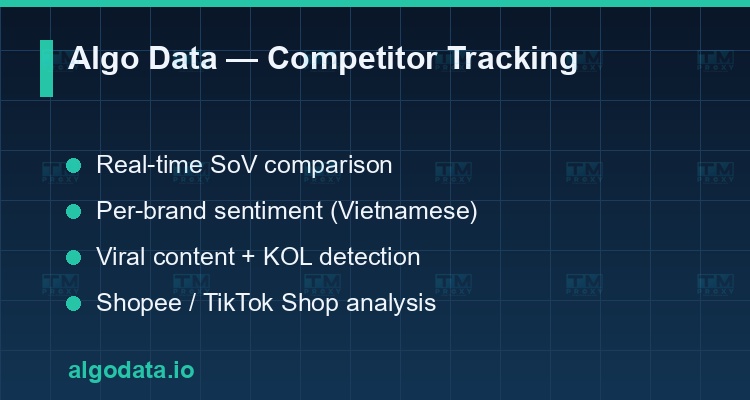
Most valuable competitor data lives in conversations on Facebook, TikTok, YouTube and e-commerce platforms. Algo Data is a social-data analytics platform that automates competitor tracking:
| Need | How Algo Data delivers |
|---|---|
| Compare market share | Measure your Share of Voice vs competitors in real time |
| Understand customer affinity | Analyze sentiment per brand (accurate in Vietnamese) |
| Track competitor content | Detect viral posts, hashtags, KOLs competitors use |
| Follow e-commerce | Analyze competitor products/prices/reviews on Shopee, TikTok Shop |
To collect competitor data at scale and continuously, you need stable proxy infrastructure to avoid IP blocking — which is why Algo Data runs on a strong data-collection backbone.
Common mistakes in competitor analysis
- Copying competitors instead of learning — the goal is to find a differentiated opportunity, not to imitate.
- Only looking at direct competitors — missing potential rivals and substitutes.
- Analyzing once and forgetting — stale data leads to wrong decisions.
- Relying on gut feeling — "competitors seem stronger" is not data; measure real SoV and sentiment.
- Ignoring the customer voice — reviews and comments about competitors are a goldmine of insight.
Conclusion: Competitor analysis is not about obsessing over rivals, but about seeing the playing field clearly and finding a differentiated move for yourself. Identify all four competitor types, measure real metrics (share of voice, sentiment) instead of gut feeling, and track continuously with tools — because competitive advantage comes from seeing earlier and acting faster.