





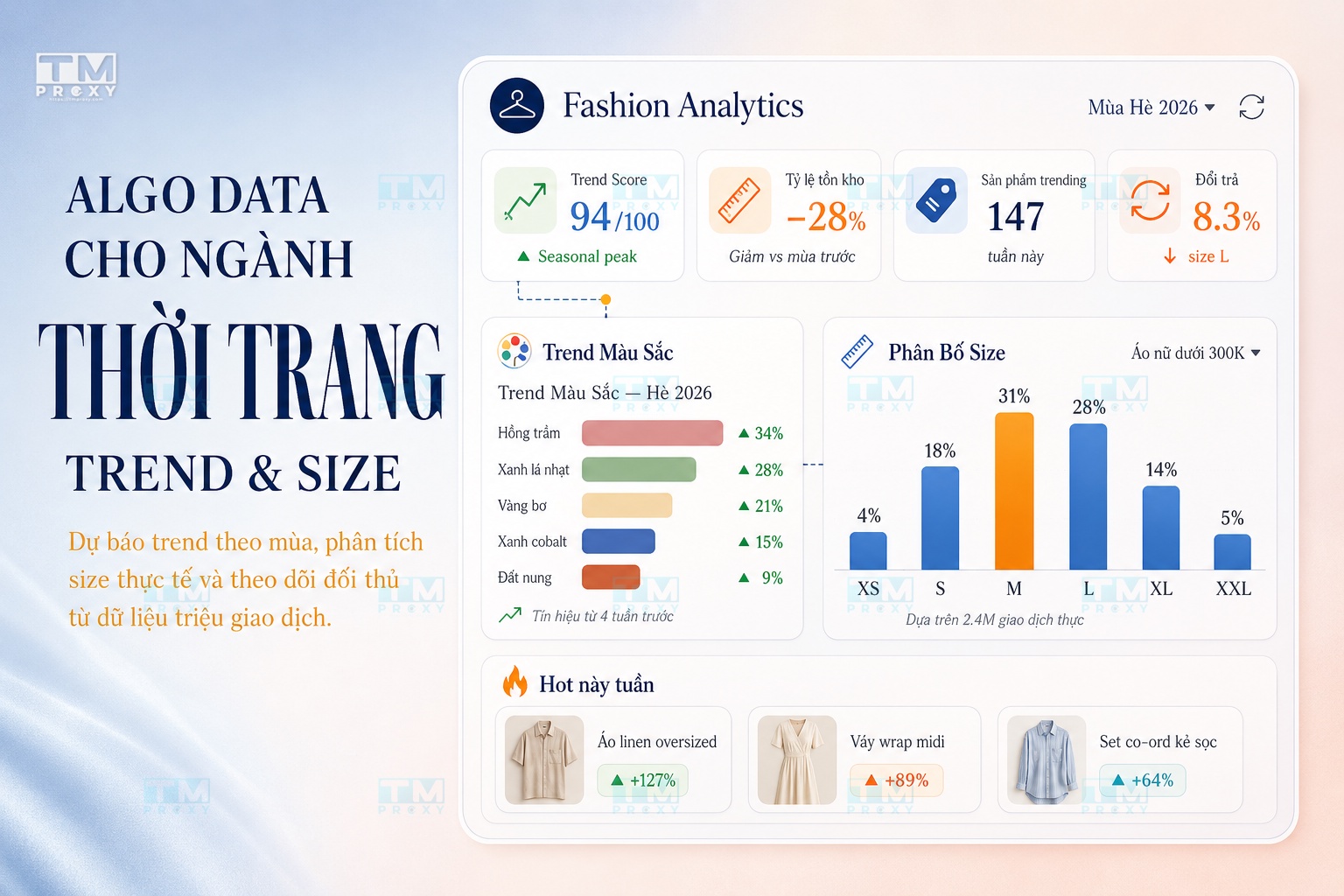
In fashion, one wrong season means a full year of losses. Buy on instinct — dead stock. Produce before the trend peaks — unsellable inventory. Order the wrong size ratio — out of stock on what sells, stuck with what doesn't. Algo Data turns those decisions from guesswork into science: real data from millions of transactions so you always have the right product, the right size, the right season.
Fashion 2026: Data Decides Who Wins
High-Speed Proxy - Ready to Try?
ALGO Proxy offers residential, datacenter & 4G proxies in 195+ countries
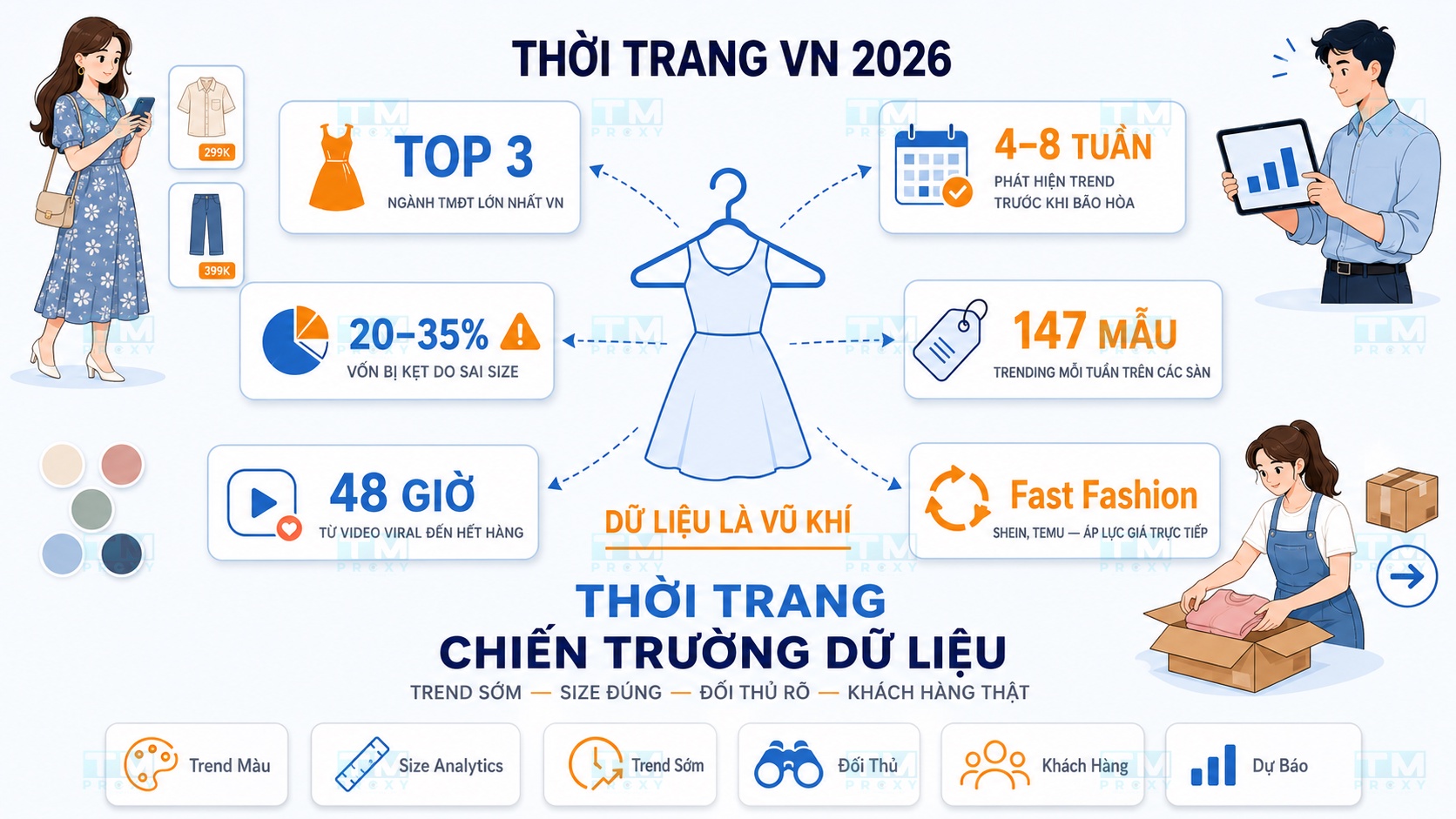
Fashion has the shortest product lifecycle and the highest inventory risk of any consumer goods category. A style that's trending this month can be completely out of fashion next month. One wrong size order can lock up capital for an entire quarter.
In Vietnam, the fashion market is facing pressure from multiple directions simultaneously:
- Global fast fashion (Shein, Temu) competing directly on price — those who don't optimize costs get eliminated
- TikTok Shop is changing how trends spread — one viral video can create explosive demand within 48 hours
- Increasingly demanding customers — genuine reviews from real buyers directly impact conversion rates
The winner in fashion in 2026 isn't the one with the best designs or the lowest prices. It's the one who reads trends 4–8 weeks earlier, orders the right sizes from the start, and responds to the market faster than competitors.
What Is Algo Data?
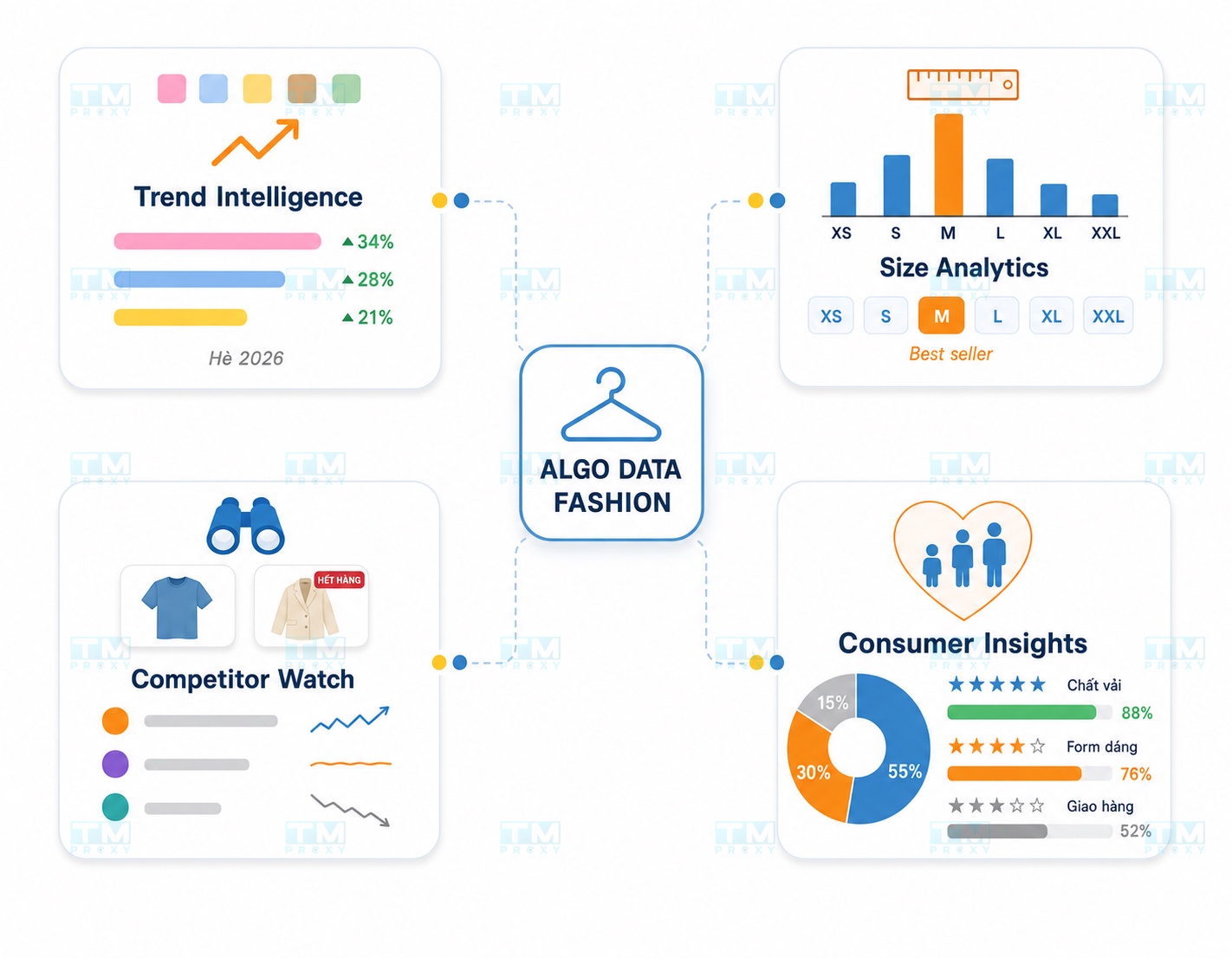
Algo Data is a deep market analytics platform for the fashion industry — aggregating and processing data from major e-commerce platforms, social media, and international markets to deliver actionable insights across the entire value chain from design to retail.
Not inventory software. Not ERP. Algo Data is the market intelligence layer — telling you what the market wants before you place your production order.
4 core pillars:
- Trend Intelligence — forecast seasonal color, silhouette, and material trends
- Size Analytics — analyze real size distribution by category and region
- Competitor Watch — track competitor product strategy and pricing
- Consumer Insights — understand purchase behavior and aesthetic preferences
Key Features
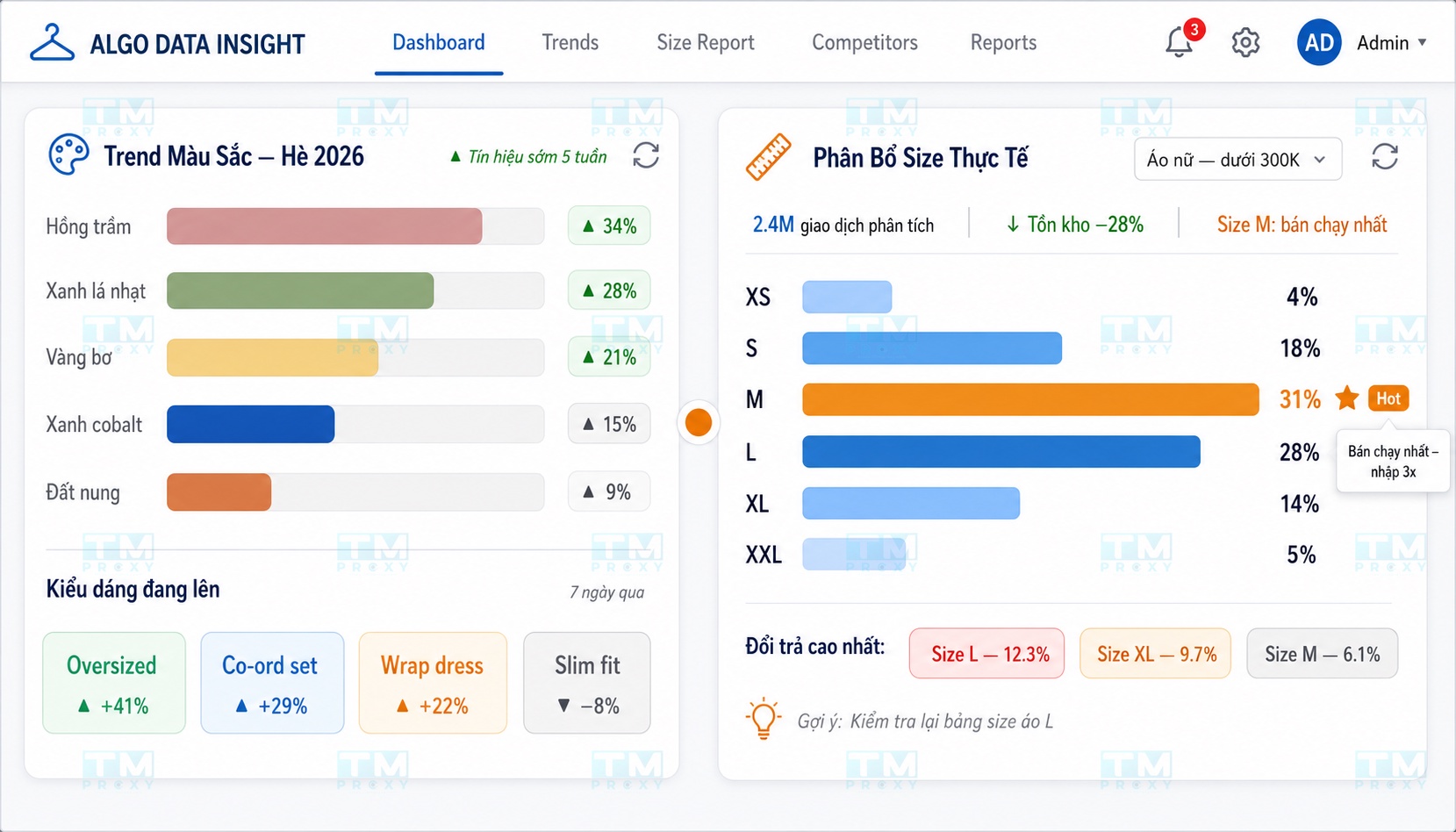
Trend Intelligence: Know What Next Season Wants — Starting Today
In fashion, early information = production advantage. By the time competitors discover a trend, you need to have already placed your order.
- Seasonal color trends: Spring-Summer and Fall-Winter palette forecasts based on global data plus Southeast Asia market signals
- Growing silhouettes: oversized, slim fit, co-ord sets, Y2K, quiet luxury — which is rising and which is falling by price segment
- Hot materials by season: linen, recycled cotton, knitwear — analyzed by both weather factors and sustainable consumption trends
- Channel-specific trend forecast: TikTok Shop trends differ from Shopee Mall trends — Algo Data separates and forecasts each independently
Size Analytics: Order the Right Ratio — No More Dead Stock, No More Stockouts
Size analysis seems simple but is the largest source of loss in fashion retail.
- Size distribution by category: women's tops, men's trousers, dresses, and sportswear all have completely different size distribution profiles
- Distribution by geography: customers in Hanoi and Ho Chi Minh City have different size profiles — region-specific stocking outperforms uniform nationwide ordering
- Distribution by price segment: customers buying under 200K and over 500K have different size profiles
- Return rate by size: which sizes have the highest return rates — a signal to review your size chart or product descriptions
Competitor Watch: Know What Competitors Are Selling and Why It Works
- Track competitor product catalogs in real time — know which styles they're pushing and which they're clearing
- Pricing strategy analysis: are competitors pricing by cost or by market, when do they discount and by how much
- Rating and review comparison: what customers praise and criticize about competitor products — opportunity to improve your own
- Detect when competitors are about to stock out — your opportunity to be present when they can't fulfill demand
Consumer Insights: Understand Customers Deeper Than They Understand Themselves
- Search behavior: fashion keywords growing on Shopee, Google, and TikTok — real purchase intent from real consumers
- Review sentiment analysis: 5-star and 1-star reviews across the full category — what do customers care about most: fabric quality, fit, or delivery?
- Repeat purchase behavior: which products customers buy multiple times vs once — guides portfolio decisions
- Cross-sell patterns: which products are frequently bought together — bundling and upsell opportunities to increase AOV
Who Should Use Algo Data?
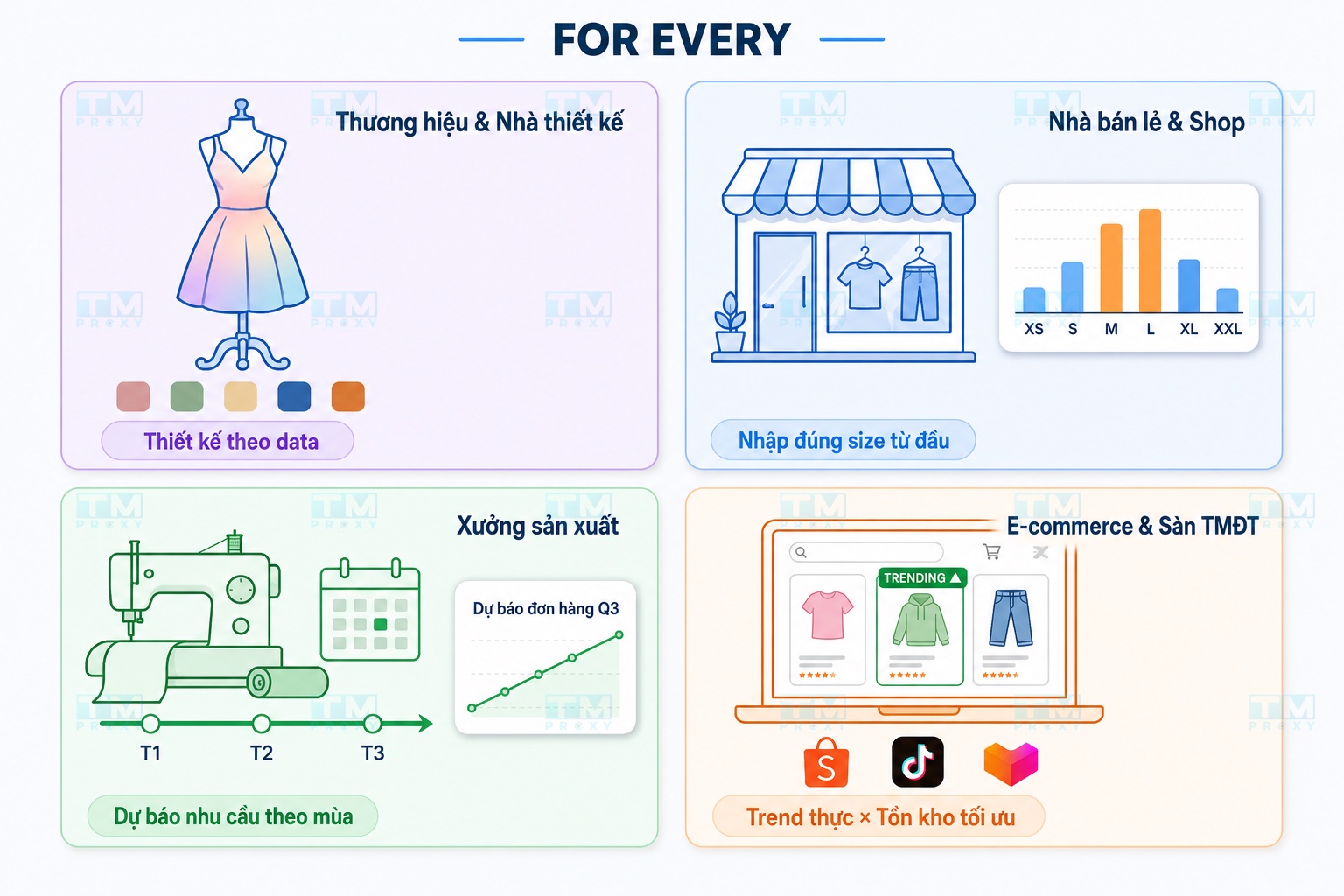
Fashion Brands & Designers
Design collections based on real trend data, not personal instinct alone. Know which colors, materials, and silhouettes the market needs — before starting production.
Retailers & Fashion Shops
Order the right styles, right sizes, and right quantities at the start of each season. Monitor competitors to adjust pricing and assortment in time. Minimize end-of-season clearance inventory.
Manufacturers & Suppliers
Forecast seasonal order demand to plan materials procurement and production capacity. Avoid the cycle of peak rush orders followed by sudden drought because your partners misread the market.
E-commerce & Fashion Platforms
Optimize product assortment with real trend data, calibrate flash sale strategy, and schedule inventory arrivals by product lifecycle — driven by data rather than intuition.
Algo Data vs. Traditional Approaches
| Criteria | Traditional Approach | Algo Data |
|---|---|---|
| Trend forecasting | Trade shows, runway, guesswork | ✓ Real market data, 4–8 weeks early |
| Size analysis | Personal experience, theoretical charts | ✓ Real distribution from millions of transactions |
| Competitor monitoring | Manual checks, unsystematic | ✓ Automated, real time |
| Customer insight | Small surveys, limited feedback | ✓ Full-market behavior analysis |
| Decision speed | Weeks to synthesize | ✓ Dashboard updated daily |
Get Started with Algo Data
Register at algodata.io — try the free tier to explore core features before deciding to upgrade.
Recommended first step for fashion businesses: run Trend Intelligence for your specific category (e.g., women's tops under 300K) and compare the results against your current inventory. The gap between "what the market wants" and "what you're selling" is the revenue opportunity you're leaving on the table.
Conclusion: Fashion is an industry where timing decides everything — whoever stocks the right product earliest wins. Data can't replace a good eye for aesthetics, but it ensures that eye is looking in the right direction. Algo Data is the foundational information layer that gives every fashion decision a real basis.