





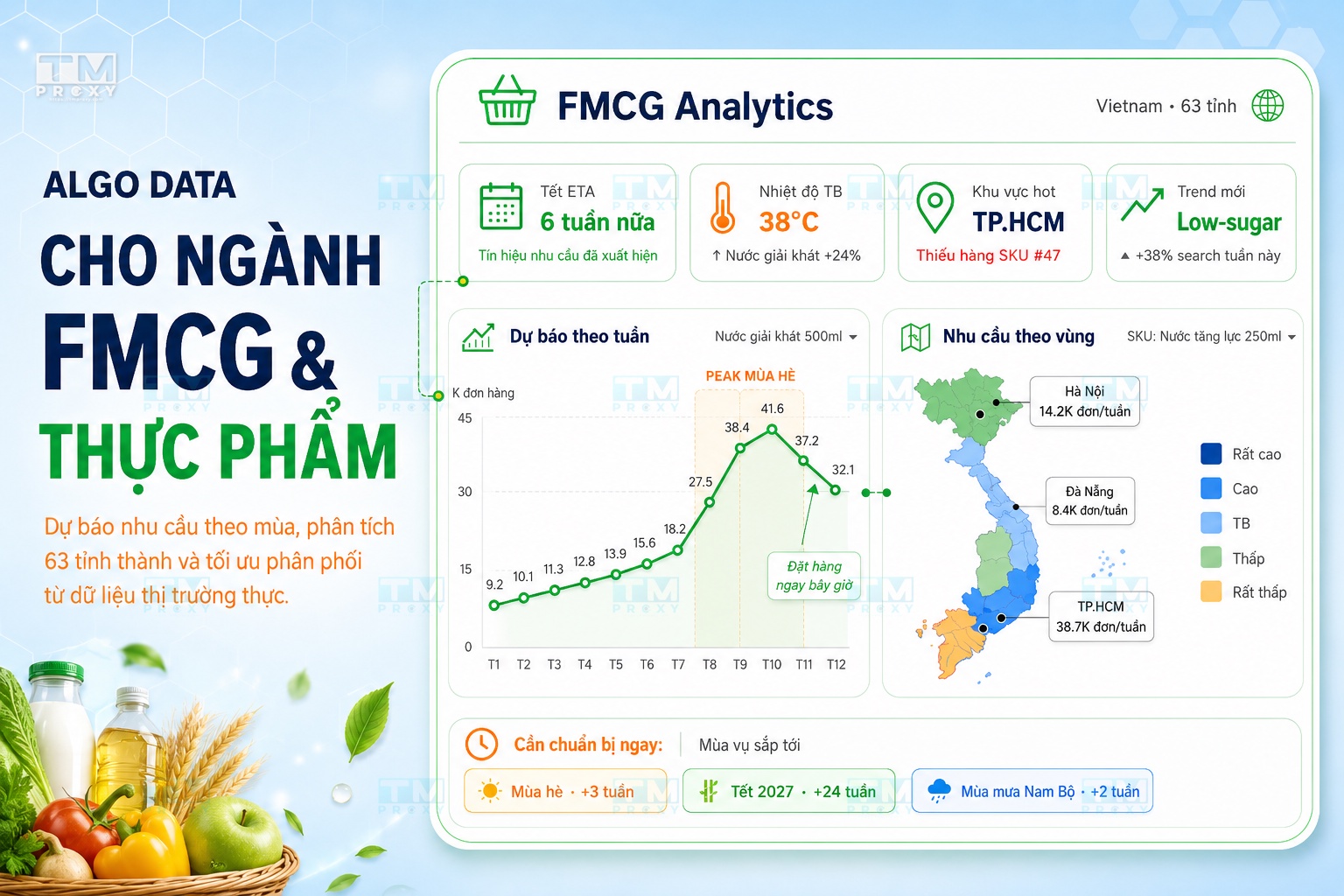
In FMCG, a one-week forecast error is enough to empty supermarket shelves or fill a warehouse with stock that won't move. Import the wrong product to the wrong region and it sits in the wrong warehouse. Miss a seasonal window — Tet, summer, or the rainy season — and the revenue is gone permanently because the stock expired before it could be sold. Algo Data provides the intelligence layer to ground every distribution and production decision in actual demand data — not intuition, not delayed reports.
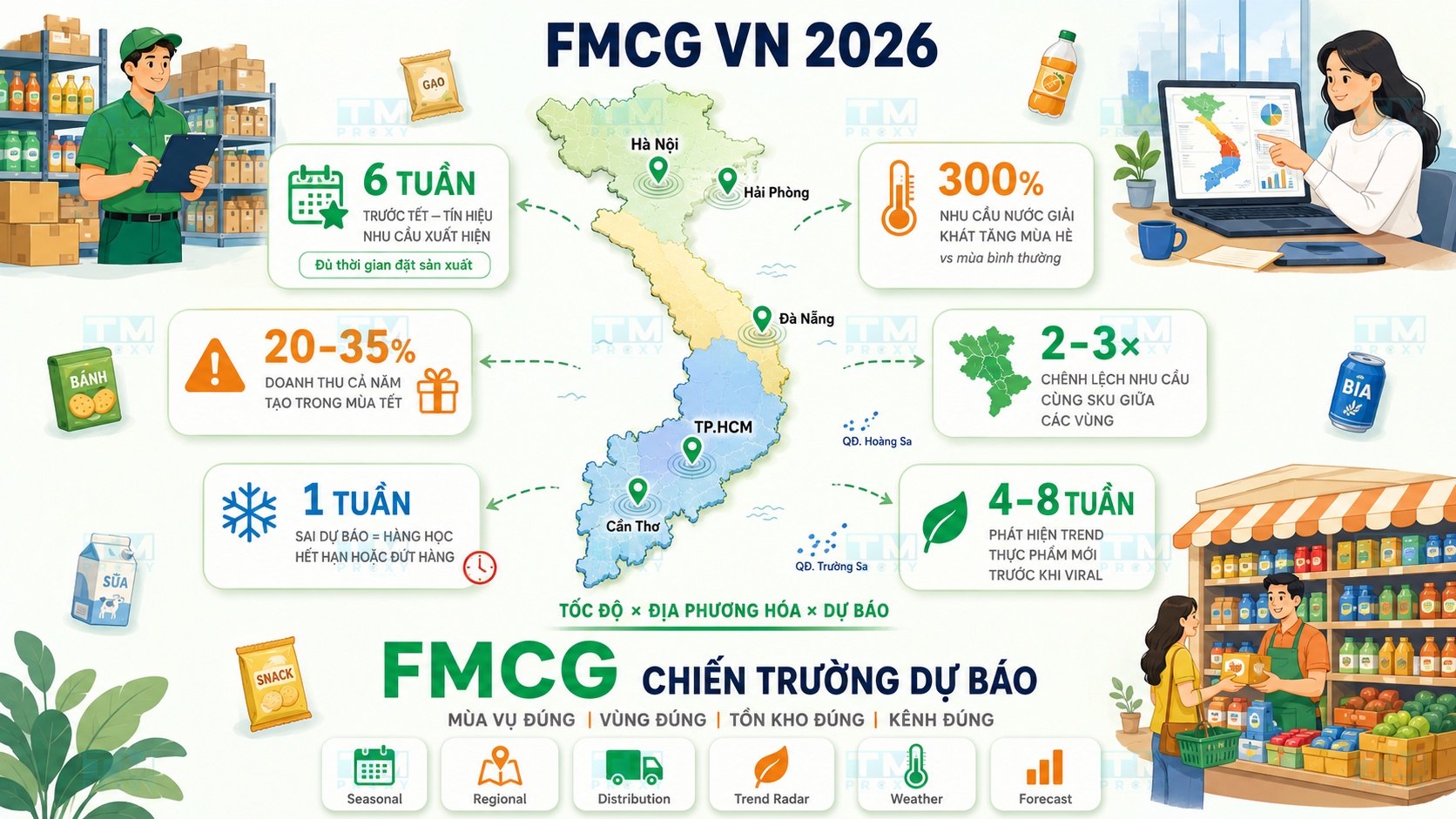
FMCG 2026: Speed and Localization Decide Everything
High-Speed Proxy - Ready to Try?
ALGO Proxy offers residential, datacenter & 4G proxies in 195+ countries
Fast-Moving Consumer Goods — the name says it all. In this industry, speed isn't a competitive advantage; it's a survival requirement:
- Short shelf lives: Tet confectionery, summer beverages, frozen foods — a wrong forecast means spoiled product, money thrown away
- Extreme seasonal demand: energy drinks surge 300% in summer; Tet cakes, candied fruits, and seeds explode in the three weeks before Tet then vanish after; hotpot broth peaks in the rainy season — wrong timing means missing the season entirely
- Strong regional preferences: Northern Vietnam eats pho, the South eats hủ tiếu; Hanoians and Saigonese drink different beer brands; the Central region eats significantly spicier — uniform national distribution wastes resources
The consequences for those still relying on Excel and intuition:
- Stockout during peak season — lost revenue, lost shelf space, damaged distributor relationships
- Post-season surplus — forced below-cost clearance or disposal of expired goods
- Misdistributed inventory — Hanoi warehouse full while Ho Chi Minh City runs dry, or vice versa
The winner in FMCG is whoever accurately forecasts weekly demand by region and adjusts distribution dynamically based on real market signals.
What Is Algo Data?
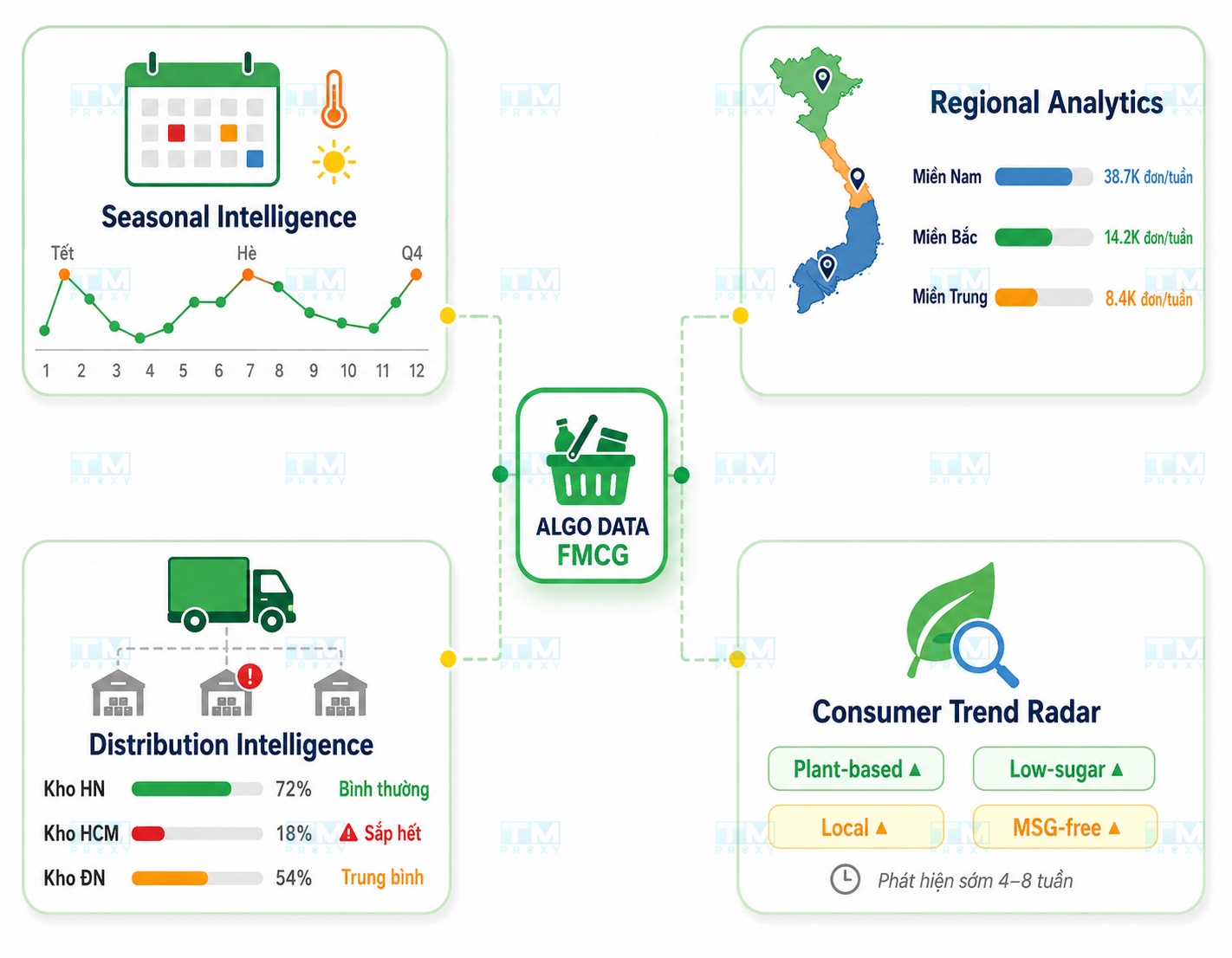
Algo Data is a comprehensive market analytics platform for the FMCG and food industry — combining historical sales data, search signals, weather data, and consumer behavior trends to deliver weekly demand forecasts, regional analysis, and distribution strategy insights.
Not ERP software. Not an internal reporting tool. Algo Data is the external market intelligence layer — telling you what the market needs, where, and when, before the bad scenario unfolds.
4 core pillars:
- Seasonal Intelligence — forecast demand by season, holiday, and weather cycle
- Regional Analytics — map consumption differences across regions and localize assortment
- Distribution Intelligence — optimize inventory allocation by channel and geography
- Consumer Trend Radar — detect emerging food trends before they go mainstream
Key Features
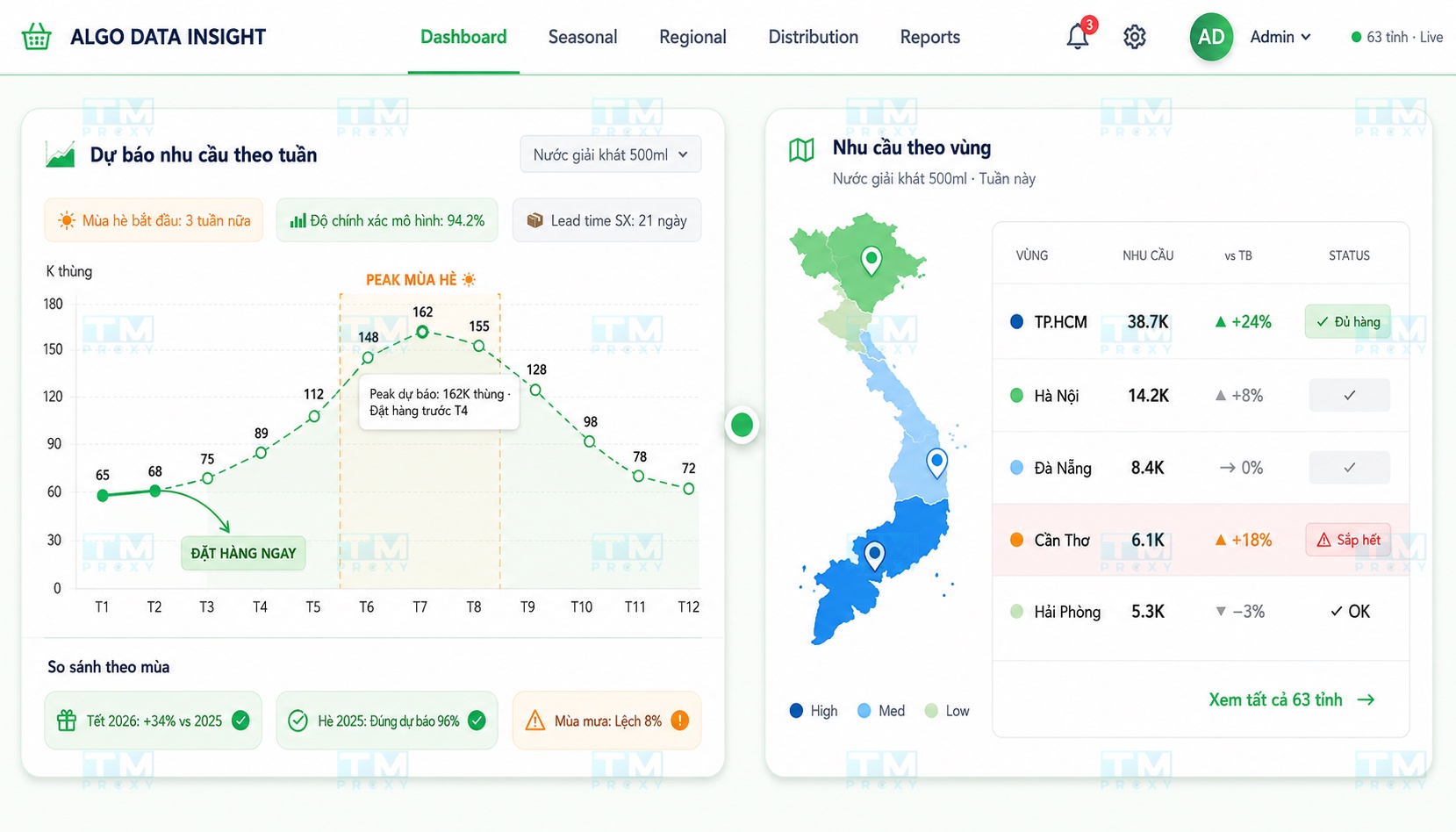
Seasonal Intelligence: Know Which Week Demand Spikes — 4–6 Weeks in Advance
In FMCG, nothing is worse than being reactive to seasonal demand. Placing production orders after demand has already spiked is too late — manufacturing and logistics lead times typically run 3–6 weeks.
- Tet (Lunar New Year): confectionery, candied fruit, nuts, bottled soft drinks, canned beer — weekly demand forecasts from T-6 weeks to T+1 week relative to Tet
- Summer (April–August): beverages, ice cream, energy drinks, electrolyte drinks — forecasts modeled on temperature projections and historical data
- Rainy season (South: May–November; North: May–September): hotpot bases, instant noodles, ready-to-eat meals — demand peaks shift by region
- Local festivals: Ghost Month (Vu Lan), Mid-Autumn, Christmas, Valentine's — each occasion drives different category demand spikes
- Weather-demand correlation: a 1°C temperature increase drives how much more beverage demand — modeled from real historical data
Regional Analytics: The Real Demand Map of Vietnam's 63 Provinces
Vietnam is not a homogeneous market. Three regions have fundamentally different palates, consumption habits, and purchasing power.
- Regional flavor profiles: spicy/salty/sweet preference mapping — Central is significantly spicier, the South prefers sweeter, the North tends saltier — directly affecting formulation and product positioning
- Local brand loyalty: some brands are nearly unsellable in one region but dominate another — data to allocate marketing spend where it converts
- Channel mix by region: ratio of modern trade (supermarkets/convenience stores) vs traditional trade (wet markets/small shops) varies significantly by province — adjust distribution strategy accordingly
- Purchasing power by geography: which provinces have high premium segment penetration, which are value-segment dominated — guides assortment decisions by market
Distribution Intelligence: Right Product, Right Warehouse, Right Time
- Stock allocation optimization: distribute inventory across regional warehouses based on local demand forecasts — prevent simultaneous surplus in one region while another runs dry
- Replenishment timing: alert when inventory at a region is approaching stockout risk based on actual sell-through velocity and demand forecast
- Channel mix analytics: which products perform better in supermarkets vs traditional trade vs online — optimize distribution budget allocation
- Competitor shelf share: track competitor shelf space in each channel and region — identify areas where competitors are weak to concentrate resources
Consumer Trend Radar: Read Taste Changes Before They Become Trends
- Emerging food trends: plant-based, low-sugar, organic, probiotics, local sourcing — detected from search signals and early reviews 4–8 weeks before breaking out
- Ingredient concern monitoring: when an ingredient starts being linked to negative news (sugar, preservatives, MSG) — demand for products containing it drops before media coverage peaks
- Meal occasion shifts: work-from-home eating patterns, solo dining trend, health-conscious breakfast habits — which categories rise and fall as behavior changes
- Price sensitivity mapping: when input costs rise, which categories consumers cut first and which maintain demand regardless — guides pricing strategy
Who Should Use Algo Data?
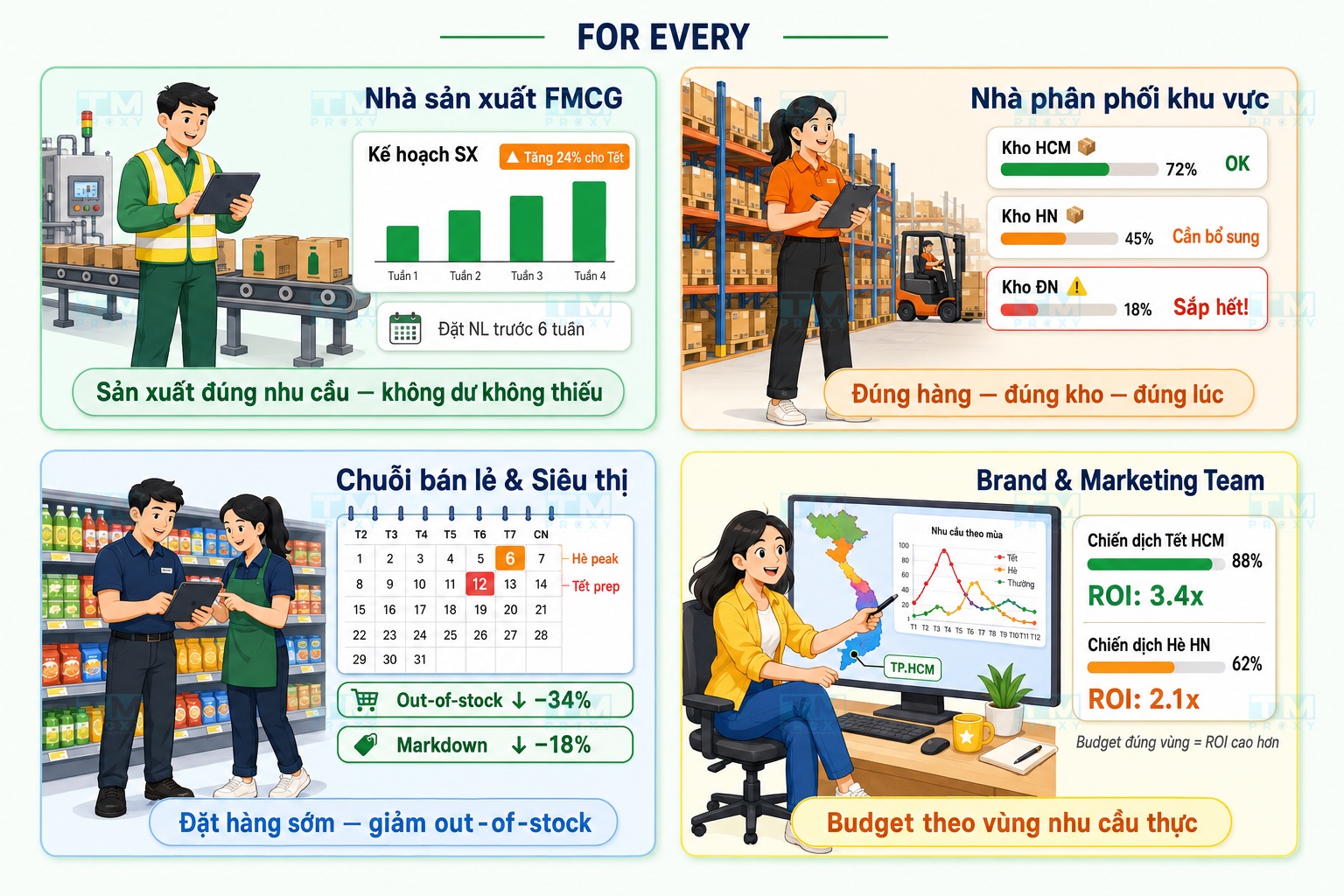
FMCG Manufacturers
Plan production schedules against real weekly market demand instead of internal quotas. Align production capacity and raw material procurement with seasonal peaks. Avoid overproduction leading to expiry.
Regional Distributors
Order the right product mix for each region, not a uniform national assortment. Optimize inventory based on local demand forecasts. Know which areas are running low so you can redistribute before stockout.
Retail Chains & Supermarkets
Allocate products to the right stores by geography and by season. Reduce out-of-stock rates during peak periods and reduce post-season markdown costs. Place supplier orders earlier based on forward-looking demand forecasts.
Brands & Marketing Teams
Plan marketing campaigns aligned with actual demand cycles. Allocate advertising budgets to regions with the highest demand concentration. Measure real demand impact from campaigns, not just impressions.
Algo Data vs. Traditional Approaches
| Criteria | Traditional Approach | Algo Data |
|---|---|---|
| Demand forecasting | Experience + internal history | ✓ Market data + weather + early signals |
| Regional analysis | Sales team reports (slow, incomplete) | ✓ Real data per province, weekly updates |
| Distribution optimization | Internal meetings, gut decisions | ✓ Automated local demand forecasting |
| Trend monitoring | Trade press, market gossip | ✓ Early signals 4–8 weeks from real data |
| Decision speed | Weeks to compile reports | ✓ Dashboard updated daily |
Get Started with Algo Data
Register at algodata.io — try the free tier to explore core features before deciding to upgrade.
Recommended first steps for FMCG businesses: run Seasonal Intelligence on your top 5 SKUs and compare weekly demand forecasts against current production and import plans. The gap between those two numbers is the inventory risk you're not currently managing. Then run Regional Analytics to see which SKUs are distributed out of proportion with actual regional demand.
Conclusion: In FMCG, there's no such thing as "a minor error" — stockout during Tet season means lost annual revenue; expired surplus means immediate cash loss. Algo Data transforms demand forecasting from "what the experienced person thinks" into a measurable, verifiable, continuously improving process.