





Reverse Proxy is an intermediary server that receives requests from clients and forwards them to backend servers. This article analyzes how it works, its security and performance benefits, pros and cons, and provides a detailed comparison with Forward Proxy.
High-Speed Proxy - Ready to Try?
ALGO Proxy offers residential, datacenter & 4G proxies in 195+ countries
What is a Reverse Proxy?
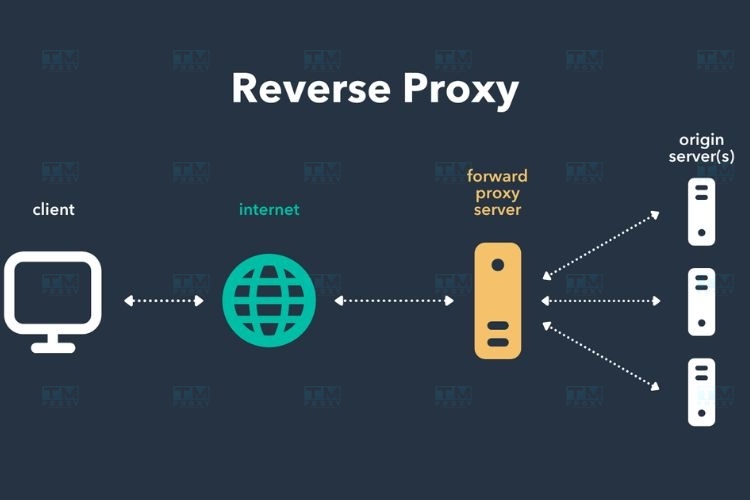
What is a Reverse Proxy? A reverse proxy is a specialized type of proxy server designed for access from public networks. Large websites and CDN (Content Delivery Network) systems commonly use reverse proxies combined with other techniques to load balance across internal servers. To reduce the load on internal servers and private networks, the reverse proxy caches static content. Additionally, features such as TLS encryption and compression can be integrated into the communication channel between the reverse proxy and the client.
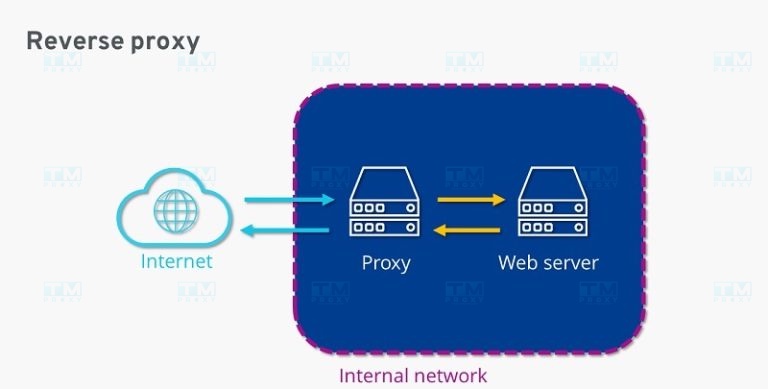
A reverse proxy is managed or owned by the web service and is accessed by clients through the internet. In a private network environment, clients have restricted access but can request the reverse proxy to retrieve resources from the internet on their behalf.
Today, reverse proxies are commonly deployed through popular software such as Caddy, Nginx, Apache, and others. These tools can inspect HTTP headers, and the reverse proxy server acts as an intermediary bridge, connecting at the network edge.
How a Reverse Proxy Works
A Reverse Proxy operates as a bridge in the network traffic flow, integrating directly with enterprise authentication systems such as Single Sign-On (SSO). When enterprise services and applications are configured to integrate with the Reverse Proxy, the system can function seamlessly without requiring any additional components. This simplifies the user experience while managing traffic to cloud-based applications and automatically redirecting data requests to the Reverse Proxy.
Furthermore, a Reverse Proxy can protect sensitive data. The function of a Reverse Proxy is to serve as an intermediary layer (or substitute) between the client and the web servers that hold critical data. Here is how a Reverse Proxy works in detail:
- Sending the request: The client sends a request for information, and the Reverse Proxy intercepts it.
- Forwarding the request: The Reverse Proxy forwards the request to the firewall. At this stage, the IT team can configure the Reverse Proxy to respond directly to client requests using cached content without contacting the web server.
- Firewall processing: The firewall decides whether to block the request or allow it to proceed to the web server.
- Web server response: The web server sends the response back through the firewall to the Reverse Proxy.
- Returning the result to the client: The Reverse Proxy server sends the final response to the client.
Additionally, the Reverse Proxy helps protect sensitive information by filtering responses from the web server, removing data that could be exploited by hackers, thereby safeguarding internal resources and critical system data.
Why You Should Use a Reverse Proxy
A reverse proxy acts as an intermediary layer between the client and network services such as websites. Here are some key features that a reverse proxy provides:
- Security: A reverse proxy serves as an intermediary layer between users and the backend server. It hides the IP address and identifying information of the actual server, protecting it from direct attacks and concealing the internal system architecture. This helps prevent attacks such as DDoS, SQL injection, cross-site scripting, and many other forms of attack.
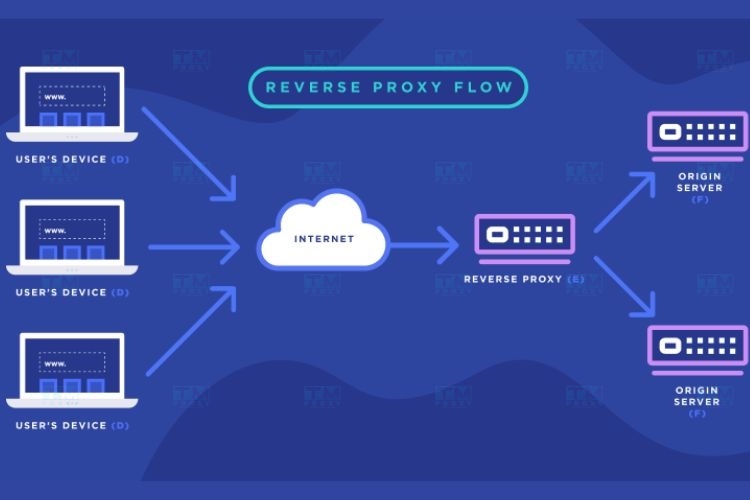
- Load balancing: For websites with high traffic volumes where millions of users may visit daily, a single server can easily become overloaded. A reverse proxy distributes traffic across multiple servers, ensuring that requests for the same website are all handled properly. If one server goes down, the remaining servers can continue processing traffic. The reverse proxy sits in front of the origin servers and distributes client requests to optimize speed and resource utilization without overloading any single server.
- Website acceleration: A reverse proxy can compress data and cache frequently requested content, speeding up the data transfer process between client and server. It also handles additional tasks such as SSL encryption to offload work from web servers, thereby improving overall system performance.
- Caching: A reverse proxy can store (cache) popular content on the server. When a user requests content that has already been cached, the reverse proxy can serve it immediately without accessing the backend server. This reduces page load times and speeds up access for users.
- Management and control: A reverse proxy provides the ability to manage and control access to the backend server. By applying access-blocking rules, user authentication, bandwidth control, and network activity monitoring, a reverse proxy helps restrict unauthorized access and ensures system security.
- SSL/TLS Offloading: A reverse proxy can handle the SSL/TLS encryption and decryption process. When using a reverse proxy, the backend server no longer needs to handle this task, improving performance and reducing server load.
- URL routing: A reverse proxy can be configured to redirect user requests to different servers based on predefined rules. This is very useful for routing requests to different applications, services, or servers based on URL paths, domain names, or other specific requirements.
Overall, using a reverse proxy helps enhance security, improve performance, increase scalability, and provide effective access management for web systems.
Risks of Using a Reverse Proxy
A reverse proxy server helps prevent direct access to the network, reducing the ability of hackers to attack customer data and IT infrastructure. This protects the system from threats and minimizes security risks because:
- It better protects servers from malicious actors.
- When your website is protected, hackers may choose to skip it or not carry out attacks.
However, it cannot be said that a reverse proxy is completely immune to security risks. An HTTP/S reverse proxy can read and modify all data traffic and user IPs passing through it. To perform functions such as filtering, caching, compression, or traffic modification, the reverse proxy needs to decrypt and re-encrypt HTTPS traffic, and therefore requires the private key of the TLS certificate. This means the reverse proxy could log passwords or inject malicious code into websites if it is compromised or controlled by a malicious party. If the reverse proxy handles multiple domains, its downtime can affect all the domains it supports.
Some organizations may configure their own reverse proxy, but this requires specialized hardware and software technical resources, along with a significant investment in IT infrastructure. To mitigate risks, many organizations opt for third-party services like Cloudflare CDN, which provides security features, performance optimization, and many additional capabilities.
Where to Buy Viettel Proxy — Reliable, Quality, and Affordable?
Advantages and Disadvantages of Reverse Proxy
Like any other technology, a reverse proxy has its own advantages and disadvantages. Understanding these will help you make informed decisions when deploying a reverse proxy in your system.
Advantages of Reverse Proxy
- Enhanced security: A reverse proxy helps hide the internal network architecture, preventing direct attacks on web servers. In this way, it provides a critical layer of protection for the system.
- Improved performance: A reverse proxy has caching capabilities and load balancing to reduce the burden on backend servers. This optimizes response times and reduces page load times for users.
- Increased availability: With the ability to redirect requests to backup servers when errors occur, a reverse proxy ensures that services are always available to users.
- Simplified management: A reverse proxy creates a single point for managing and monitoring backend servers, reducing the workload for administrators.
- Flexibility and scalability: A reverse proxy allows easy addition, replacement, or upgrading of backend servers without disrupting users or services.
- Better user experience: Thanks to caching and response optimization features, a reverse proxy reduces website load times, thereby enhancing the user experience.
Disadvantages of Reverse Proxy
- Increased complexity: Deploying a reverse proxy can add complexity to the network and web system, requiring careful management and configuration.
- Potential single point of failure: A reverse proxy can become a single point of failure in the system. If it encounters issues, it can affect the entire network and web system operations.
- Higher costs: Using a reverse proxy can increase costs for maintaining and operating the network and web system, as it requires additional hardware and software resources.
- Performance impact: A reverse proxy can reduce system performance if not properly optimized, causing delays in data transmission.
- Security concerns: If not properly configured and managed, a reverse proxy can create new security vulnerabilities, potentially exposing the system to attacks or intrusions.
Comparing Reverse Proxy and Forward Proxy
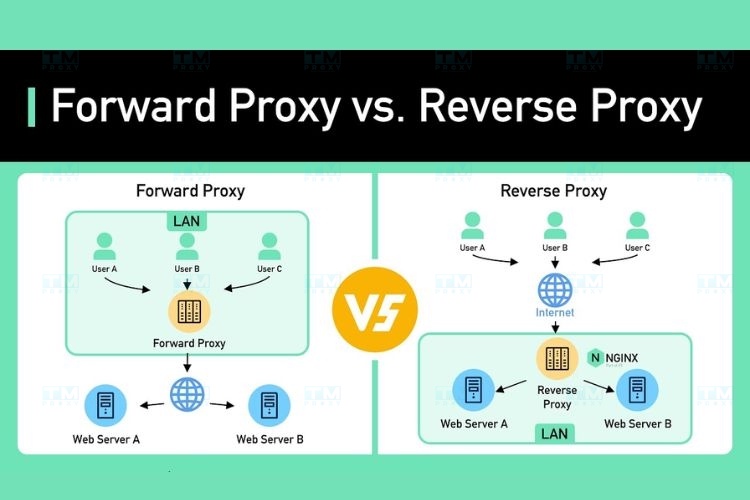
Proxy Server is considered a very important component in network system architecture. Among them, the two most common types of Proxy Server are Reverse Proxy and Forward Proxy. These two types of proxies operate through completely different mechanisms to meet different requirements and use cases. Specifically:
Position and Access Flow
Reverse Proxy: Placed on the backend server side of the system. When a user sends a request to access a website, the request is first sent to the reverse proxy. The reverse proxy determines the appropriate target server and forwards the request to the backend server, thereby hiding the IP address and detailed information of the backend server from the user. Reverse proxies are typically deployed within internal networks and act as gateways to the system.
Forward Proxy: Placed on the user side or in front of the backend server. When a user wants to access a website, the access request is first sent to the forward proxy. The forward proxy receives the request and forwards it to the external server. Forward proxies are typically deployed on personal computers or within internal networks. Users need to configure their browser or application to use the forward proxy, allowing it to retain access information and represent the user in making requests.
Functions and Applications
Reverse Proxy: A reverse proxy performs many important functions within a system. One of the main functions is load balancing, which distributes user traffic across multiple servers, balancing the workload and improving performance. The reverse proxy also supports caching, storing popular content from the backend server to serve similar requests, reducing page load times and speeding up access. Additionally, the reverse proxy provides an extra layer of protection for the backend server by concealing information and protecting against direct attacks. It also allows management and control of access to the backend server.
Forward Proxy: A forward proxy functions to hide the real IP address and identity of the user. It allows users to access Internet resources without revealing their actual IP address. The forward proxy also has access control capabilities, allowing management and monitoring of user access requests while applying access policies and content filters. For this reason, forward proxies are commonly used in corporate or organizational environments to control Internet access and protect against malicious content.
Security and Access Control
Reverse Proxy: A reverse proxy provides an additional layer of protection for the backend server. By hiding the information and IP address of the server, a reverse proxy helps prevent direct attacks and protects critical information. It also allows management and control of access to the backend server through the application of configuration rules.
Forward Proxy: A forward proxy allows users to hide their real IP address, thereby protecting their identity and preventing online activity tracking. Additionally, a forward proxy has access control and content filtering capabilities, helping manage and monitor access to Internet resources.
Deployment and Management
Reverse Proxy: Deploying and managing a reverse proxy typically requires technical knowledge and complex configuration. Reverse proxies are commonly used in internal network environments and need to be managed and maintained to ensure system stability and efficiency.
Forward Proxy: Deploying a forward proxy is simpler and is usually configured on personal computers or within internal networks. Users can easily configure their browser or application to use a forward proxy. Managing a forward proxy is also relatively straightforward and can apply access management policies and content filters as needed.
In summary, reverse proxy and forward proxy are two common types of proxy servers with different purposes and functions. A reverse proxy is placed on the backend server side and forwards requests from users, while a forward proxy sits on the user side and forwards requests to external servers. Both types of proxies play important roles in improving performance, security, and access management in networks.
{{< test-result title="Reverse Proxy vs Forward Proxy Comparison" headers="Criteria|Reverse Proxy|Forward Proxy" row1="Position|Server side (backend)|Client side (user)" row2="Protection|Backend servers|End users" row3="Main function|Load balancing, caching, SSL|Anonymity, access control" row4="Configuration|Complex, requires expertise|Simpler" row5="Use cases|Large websites, CDN|Enterprise networks, personal" />}}
Conclusion: Reverse Proxy is an important technology that helps improve performance, security, and scalability for web applications. Understanding how it works, its advantages and disadvantages, and the differences from Forward Proxy helps you deploy effectively and better protect your system.