






Datacenter Proxies use IP addresses from data centers, delivering high speed and low cost. This article provides a detailed comparison of the pros and cons between Datacenter Proxies and Residential Proxies to help you make the right choice.
High-Speed Proxy - Ready to Try?
ALGO Proxy offers residential, datacenter & 4G proxies in 195+ countries
What is a Datacenter Proxy?
Datacenter Proxy, one of the most popular types of proxies today, is an effective solution for hiding your IP address and accessing the internet securely.
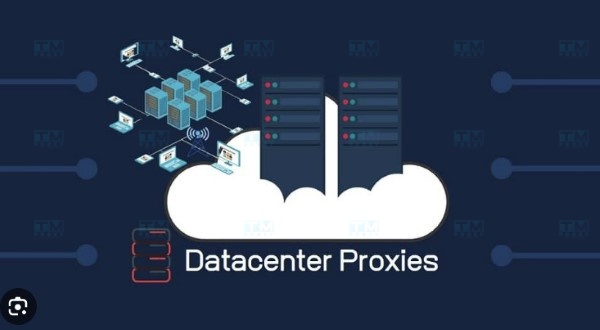
How Datacenter Proxies Work
Datacenter Proxies use IP addresses provided by data centers -- large-scale infrastructures with numerous servers and high-bandwidth internet connections. When you use a Datacenter Proxy, your device connects to a proxy server located in the data center instead of connecting directly to the internet.
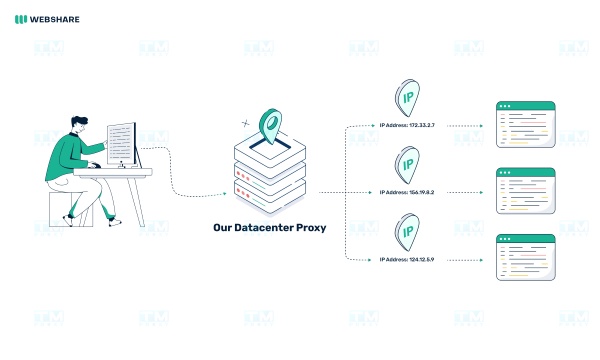
The data transmission process when using a Datacenter Proxy:
- You send a request to access a website to the proxy server.
- The proxy server receives the request and processes it on your behalf.
- The proxy server sends the request to the target website using its own IP address.
- The target website sends the response data back to the proxy server.
- Finally, the proxy server forwards that data to your device.
Advantages of Datacenter Proxies
- Fast access speed: Data centers typically have high-bandwidth internet connections and powerful server systems, ensuring fast access speeds.
- High bandwidth: The ability to handle large volumes of simultaneous traffic is a significant advantage.
- Low cost: Compared to Residential Proxies, Datacenter Proxies are usually more affordable.
- Easy management and configuration: Most providers offer intuitive tools and control panels.
What is a Servlet? Applications and Comparison Between JSP and Servlet
Disadvantages of Datacenter Proxies
- Easy to detect: Since they use IP addresses concentrated in the same data center, they are easily detected by websites.
- Risk of being blocked: Many websites have detected and blocked Datacenter Proxy IP addresses.
- Lower security than Residential Proxies: Not designed for the highest level of personal information protection.
What is a Residential Proxy?
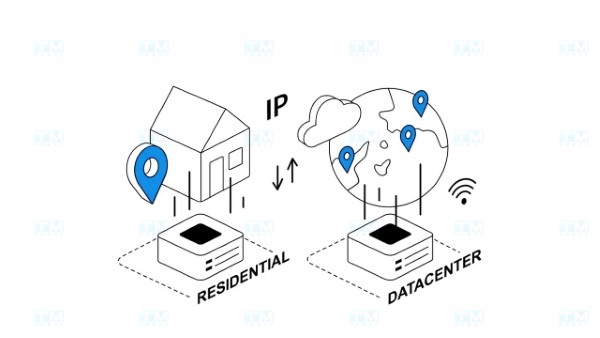
Unlike Datacenter Proxies, Residential Proxies use IP addresses from household devices connected to the internet. This is a superior proxy solution when you need absolute anonymity and want to avoid detection.
How Residential Proxies Work
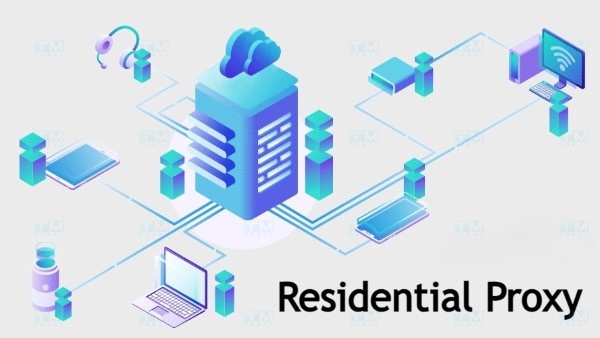
Residential Proxy providers partner with individuals and ISPs to collect and grant access to household IP addresses. When you use a Residential Proxy, your device connects to the internet through a proxy server using an actual household IP address.
How it works:
- You connect to the Residential Proxy network through a proxy provider.
- The system automatically assigns you an IP address from the household network.
- When you visit a website, the request is sent through the proxy with the household IP address.
- The website receives the request from an IP address that looks like it comes from a regular user.

Advantages of Residential Proxies
- High anonymity: Effectively hides your real IP address.
- Avoids being blocked: Uses household IP addresses, making it difficult for websites to detect and block.
- Increased trustworthiness: Websites tend to trust connections from Residential Proxies more.
- Suitable for sensitive tasks: Account registration, online shopping, and forum activities.
Disadvantages of Residential Proxies
- High cost: The expense of maintaining and managing a large proxy network.
- Potentially slower speeds: Depends on the internet connection speed of the household providing the proxy.
- Potentially lower stability: Connections may be interrupted due to the household's connectivity issues.
Comparing Residential Proxies and Datacenter Proxies
For a clear overview and to help choose the right type of proxy, here is a comparison table:
| Feature | Residential Proxy | Datacenter Proxy |
|---|---|---|
| Anonymity | Very high | Low |
| Ability to avoid blocks | High | Low |
| Speed | May be slower | Fast |
| Stability | May be unstable | Stable |
| Cost | High | Low |
| Best for | Sensitive tasks, SEO, scraping | Simple tasks, high speed |
| Security | High | Low |
Why are Residential Proxies Superior?
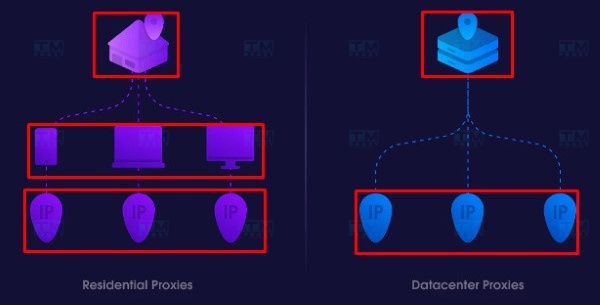
Although Datacenter Proxies have advantages in speed and pricing, Residential Proxies are still considered the superior choice in many cases:
Avoiding Detection and Blocking
Residential Proxies use real household IP addresses, appearing as a regular user and making them hard to detect. This is especially important when performing automated tasks such as data scraping.
Higher Success Rate
Residential Proxies help increase the success rate for account registration, online shopping, and forum activities. Websites tend to trust connections from Residential Proxies more.
Protecting Personal Information
When using a Residential Proxy, your real IP address is always hidden and securely protected. This is crucial when accessing sensitive websites.
Which Type of Proxy Should You Use?
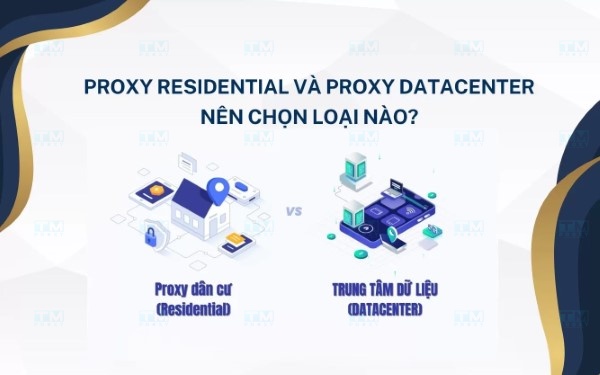
The choice between Residential Proxies and Datacenter Proxies depends on your needs and intended use.
Use Residential Proxies When
- You need to hide your IP and avoid detection.
- You need to access geographically restricted websites.
- You need to perform sensitive tasks such as account registration and online shopping.
- You need to optimize SEO and marketing.
- You need to scrape data from websites.
Use Datacenter Proxies When
- You need fast and stable access speeds.
- You need high bandwidth for downloading large files or streaming video.
- You need an affordable proxy solution for simple tasks.
Where to Buy Reliable Datacenter Proxies?
To choose a reputable and reliable provider, consider the following factors:
Factors to Consider
- Reputation and experience: Choose a provider with a long-standing reputation in the proxy industry.
- Service quality: Check access speeds and proxy stability through customer reviews.
- Extensive proxy network: The more proxy locations available, the more options you have.
- Pricing and payment policies: Compare prices across different providers.
- Customer support: Choose a provider that offers 24/7 support services.
Conclusion: Datacenter Proxies and Residential Proxies are two popular types of proxies, each with their own pros and cons. Datacenter Proxies are ideal for tasks requiring high speed at a low cost. Residential Proxies offer high anonymity, are harder to block, and are suitable for sensitive activities and security-focused operations.