





OpenStack is a powerful open-source platform that helps organizations build and manage their own private cloud or hybrid cloud infrastructure. This article helps you understand the concept, components, advantages, disadvantages, and how to deploy OpenStack.
High-Speed Proxy - Ready to Try?
ALGO Proxy offers residential, datacenter & 4G proxies in 195+ countries
What is OpenStack?
OpenStack is an open-source software suite consisting of multiple components that allow organizations to build and manage cloud environments. With OpenStack, companies can create their own cloud infrastructure, thereby enhancing control and data security.
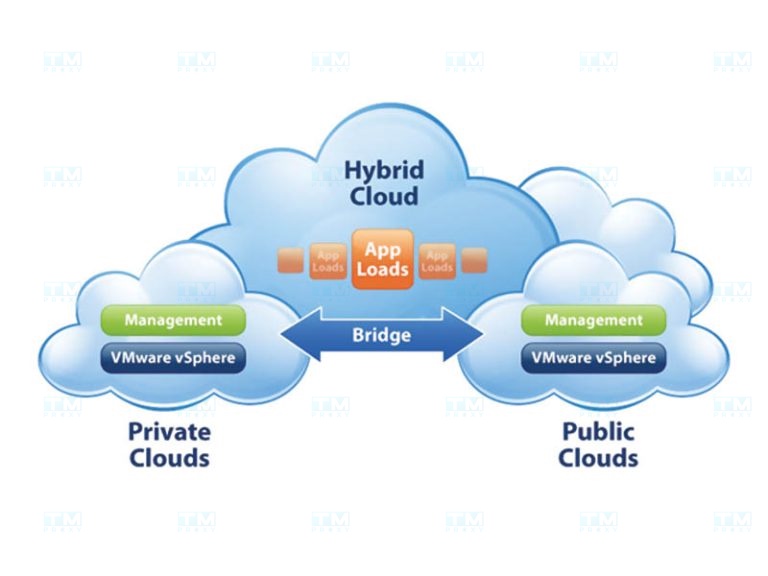
What makes OpenStack special is that it supports both private cloud and hybrid cloud, enabling organizations to flexibly integrate public and private cloud resources. Thanks to its open architecture, users can customize and integrate features and services according to each organization's specific needs.
What is OpenStack Used For?
OpenStack is an open-source platform used to build and manage cloud computing infrastructure. Here are the main applications:
- Server resource management: Manage physical and virtual servers, ensuring optimal resource allocation.
- Building cloud infrastructure: Create private cloud, public cloud, or hybrid cloud environments.
- Automating service deployment: Automate the deployment and scaling of applications quickly.
- Data storage management: Support Object Storage, Block Storage, and File Storage.
- Network management: Configure virtual networks, load balancing, and firewall management.
- AI and Big Data integration: Deploy big data analytics solutions and artificial intelligence applications.
How Does OpenStack Work?
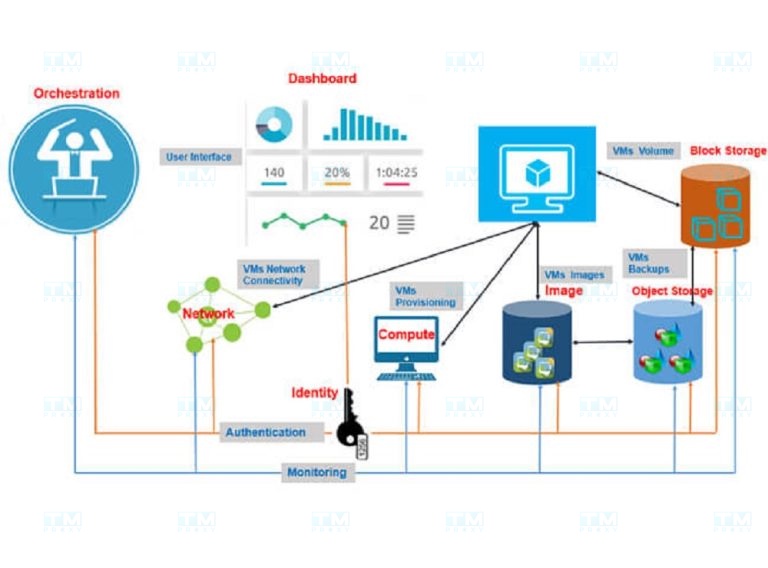
OpenStack operates on a microservices architecture — multiple small, independent services that communicate with each other through APIs. These services work together to provide a fully-featured cloud platform.
When a user requests resources (for example, a virtual machine), the process works as follows:
- Authentication (Keystone): Verifies the user's access rights.
- Resource allocation (Nova): Allocates CPU and RAM for the virtual machine.
- Network connection (Neutron): Ensures network connectivity for the virtual machine.
- Storage provisioning (Cinder/Swift): Provides the necessary storage capacity.
Core Components of OpenStack
OpenStack consists of multiple components, each playing a critical role in delivering cloud services.
Nova — Compute Service
Nova is the primary service for managing virtual machines. It is responsible for creating, starting, stopping, and deleting virtual machines. Nova also supports compute resource management and live migration between virtual machines.
Swift — Object Storage
Swift is a distributed object storage service designed to store large volumes of unstructured data such as images and videos. Swift features data backup and recovery capabilities, ensuring high availability.
Glance — Image Service
Glance is the service for managing operating system and application images, allowing Nova to use these images to create virtual machines. Glance supports multiple image formats.
Neutron — Networking Service
Neutron is the network controller, ensuring virtual machines can connect and communicate with each other. It manages virtual networks, IP address allocation, and traffic routing.
Cinder — Block Storage
Cinder is the block storage management service that allows users to create, attach, and manage storage volumes for virtual machines.
Keystone — Identity Service
Keystone is the identity management and access control service that authenticates users and grants access to resources.
Advantages and Disadvantages of OpenStack
Advantages
- Open source: Free access to and modification of source code, highly customizable.
- Flexible scalability: Easily add or remove components as needed.
- Technology integration: Compatible with Kubernetes, Docker, and other cloud platforms.
- Strong community support: Rich documentation and a large user community.
Disadvantages
- High complexity: Setup and deployment require in-depth knowledge.
- Technical requirements: Requires a skilled technical team for operation and maintenance.
- Learning curve: Newcomers need considerable time to become familiar with the platform.
OpenStack Compared to Other Cloud Platforms
VMware vCloud
VMware vCloud is generally easier to use, but less flexible and more expensive than OpenStack. OpenStack is an attractive choice for organizations wanting to save costs while maintaining high flexibility.
Public Clouds (AWS, Azure, Google Cloud)
Public cloud platforms are easier to use and deploy. However, OpenStack offers greater control and flexibility while reducing long-term costs through self-managed infrastructure.
How to Deploy OpenStack
- Manual deployment: Requires in-depth knowledge, allows maximum customization but is time-consuming.
- Pre-built deployment solutions: Providers like Red Hat, Canonical, and SUSE offer solutions that simplify the installation process.
- Automation tools: Ansible, Puppet, and Chef help automate deployment, reducing errors and saving time.
Conclusion: OpenStack is a powerful open-source cloud platform, ideal for organizations that need full control over their IT infrastructure. Although it requires advanced technical expertise, OpenStack delivers flexibility and long-term cost savings.