





Vietnam IPv4 Proxy uses the most widely adopted IPv4 protocol today, helping you hide your real IP, bypass geo-restrictions, and support online marketing. This article provides a detailed analysis of pros and cons, a comparison with IPv6, and a guide to choosing a reliable provider.
What is an IPv4 Proxy?
High-Speed Proxy - Ready to Try?
ALGO Proxy offers residential, datacenter & 4G proxies in 195+ countries
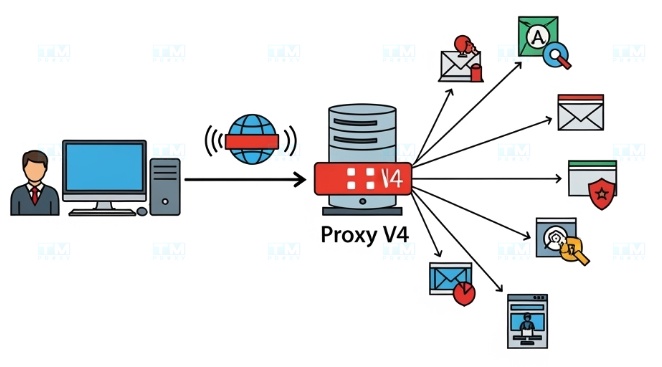
An IPv4 Proxy is an intermediary server that operates on Internet Protocol version 4 (IPv4). When you use an IPv4 Proxy, your internet traffic passes through this proxy server before reaching the website or service you want to access. This hides your real IP address and replaces it with the proxy server's IP address.
Why is IPv4 Proxy Popular in Vietnam?
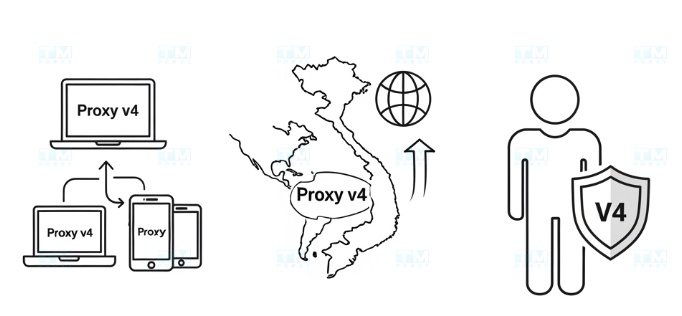
- High compatibility: IPv4 remains the most widely used internet protocol globally. Most websites, applications, and online services are built to be fully compatible with IPv4. This ensures that when using an IPv4 Proxy, you can access virtually every corner of the internet without encountering technical barriers.
- Bypassing geo-restrictions: One of the most popular applications of Vietnam IPv4 Proxy is the ability to access geo-restricted content. By using a proxy with a Vietnamese IP address, users from around the world can easily access services and websites exclusively available in the Vietnamese market.
- Enhanced security and anonymity: For privacy-conscious users, IPv4 Proxy provides an effective layer of protection. Hiding your real IP address helps prevent third parties from tracking your online activities, reduces the risk of cyberattacks, and protects personal information.
- Marketing and business support: Businesses and online marketers often use IPv4 Proxy to manage multiple social media accounts, execute SEO campaigns, and collect market data without being detected or having their IPs blocked.
Pros and Cons of Vietnam IPv4 Proxy
| Pros | Cons |
|---|---|
| Wide compatibility: works well with most websites and services | Limited IP pool: IPv4 supply is gradually depleting, costs may be higher |
| Easy to set up and use: many guides and supporting software available | Security is not absolute: compared to IPv6, lacks built-in security features |
| Effective for specific tasks: account management, bypassing firewalls, scraping | Speed may be affected: routing through an intermediary server can reduce speed |
| Affordable pricing with some datacenter proxy types | Hard to find clean IPs: due to scarcity, many IPs have been abused and are blacklisted |
Comparing IPv4 Proxy and IPv6 Proxy
A common question is whether to choose IPv4 Proxy or IPv6 Proxy. Here is a comparison:
| Criteria | IPv4 Proxy | IPv6 Proxy |
|---|---|---|
| Address space | ~4.3 billion (32-bit) | Virtually unlimited (128-bit) |
| Security | Application-dependent | Built-in IPSec |
| Compatibility | Very high | Growing, not yet widespread |
| Speed | Fast due to simple routing | Potentially faster due to optimized headers |
| Cost | Higher due to scarcity | Lower due to large IP pool |
| Criteria | IPv4 Proxy | IPv6 Proxy |
|---|---|---|
| Website support | 99% | 72% |
| Success rate (e-commerce) | 95% | 68% |
| Success rate (social media) | 93% | 55% |
| Average response time | 0.7s | 0.6s |
IPv4 Proxy excels in compatibility with 99% website support. IPv6 Proxy is faster but many Vietnamese websites do not yet fully support IPv6.
Choosing between IPv4 and IPv6 Proxy depends on your specific needs. If you prioritize compatibility and access to existing systems, IPv4 Proxy is the safe choice. If you are looking toward the future with higher security requirements and a larger IP pool, IPv6 Proxy is a worthwhile investment.
Choosing a Reliable Vietnam IPv4 Proxy Provider
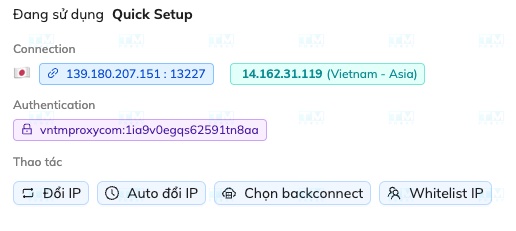
The Vietnam IPv4 Proxy market is diverse, but not all providers guarantee quality. To choose a reliable service, you should consider the following factors:
- Speed and stability: This is the most important factor. Look for providers that guarantee high connection speed and uptime.
- Proxy type: There are different types of proxies such as residential proxies and datacenter proxies. Residential proxies generally have higher reliability and are less likely to be detected, but they also cost more.
- Security and refund policies: Ensure that the provider has a clear privacy policy with no activity logging. A flexible refund policy is also a plus.
- Customer support: A professional technical support team that is available 24/7 to answer questions and resolve issues will provide a better experience.
- Community reviews: Checking opinions from other users on forums and tech communities is an effective way to verify reliability.
Conclusion: Vietnam IPv4 Proxy remains a powerful and suitable tool for many purposes — from protecting privacy to supporting business operations. With its high compatibility and proven effectiveness, IPv4 Proxy is the safe choice for most users. TMProxy provides high-quality Vietnam IPv4 Proxy with various pricing plans to fit your needs.