





SOAP (Simple Object Access Protocol) is an XML-based communication protocol that allows applications to exchange data over a network. This article explains SOAP's structure, how it works, compares it with REST, and when you should use it.
What is SOAP?
High-Speed Proxy - Ready to Try?
ALGO Proxy offers residential, datacenter & 4G proxies in 195+ countries
SOAP, which stands for Simple Object Access Protocol, is an XML-based communication protocol used to exchange data between applications over computer networks. SOAP is designed to allow applications running on different platforms and programming languages to communicate with each other easily and efficiently.
SOAP was developed in the late 1990s by Microsoft, and later became a W3C (World Wide Web Consortium) standard in 2003. The primary goal of SOAP is to provide a simple and standardized way for applications to exchange information, regardless of the platform or programming language being used.
Basic Structure of SOAP
SOAP uses XML format to encapsulate and transmit messages. A SOAP message has the following basic structure:
- Envelope: This is the root element of the SOAP message, defining the beginning and end of the message.
- Header: This part is optional and contains supplementary information such as authentication, encryption, or processing instructions.
- Body: This part contains the main content of the message, including data or requests to be transmitted.
- Fault: This part is optional and is used to report errors during message processing.
Example of a SOAP message structure:
<soap:Envelope xmlns:soap="http://www.w3.org/2003/05/soap-envelope">
  <soap:Header>
    <!-- Header information -->
  </soap:Header>
  <soap:Body>
    <!-- Message content -->
  </soap:Body>
</soap:Envelope>
How SOAP Works
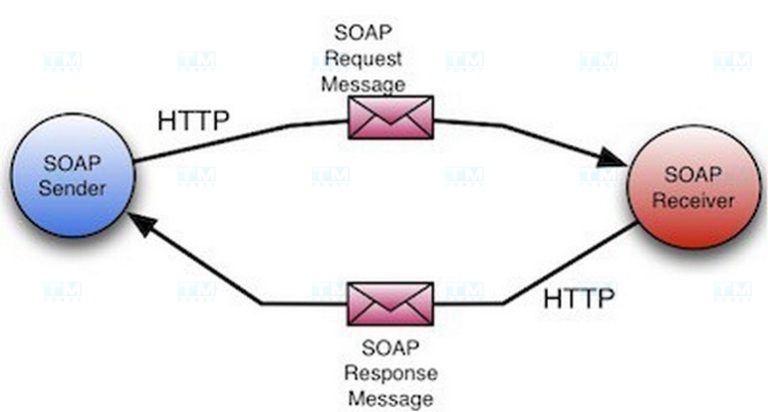
SOAP operates on a client-server model and uses HTTP or SMTP protocols to transmit messages. The SOAP workflow includes the following steps:
- Client creates a SOAP request: The client creates an XML message in SOAP format, containing information about the method to be called and related parameters.
- Sending the request: The SOAP message is packaged in an HTTP POST request and sent to the server.
- Server processes the request: The server receives the SOAP message, decodes it, and performs the corresponding actions.
- Server creates a response: After processing the request, the server creates a SOAP message containing the results or error notifications.
- Sending the response: The server sends the SOAP response message back to the client.
- Client processes the response: The client receives and processes the SOAP response message from the server.
Key Functions of SOAP
SOAP has the following key functions:
Data transmission: SOAP enables the transmission of structured data between applications, regardless of platform or programming language. Remote method invocation: SOAP allows one application to call methods or functions on another application over the network. Authentication and security: SOAP supports authentication and security mechanisms to ensure the integrity and security of transmitted data. Error handling: SOAP provides error handling through the Fault element, helping to identify and report errors that occur during message processing. Extensibility: SOAP allows defining custom elements in the Header section, enabling the extension of the protocol's functionality.
Benefits and Limitations of SOAP
SOAP, like any technology, has its strengths and weaknesses. Here are the main benefits and limitations of SOAP:
Benefits:
- Platform and language independence: SOAP allows applications written in different languages and running on different platforms to communicate with each other.
- Standardization: SOAP is a widely recognized standard protocol, ensuring compatibility between different systems.
- Strong security: SOAP supports security mechanisms such as WS-Security, protecting sensitive information during transmission.
- Good error handling: SOAP provides detailed error handling mechanisms, making it easier to detect and resolve issues.
- Support for complex transactions: SOAP is suitable for enterprise applications with complex transaction processing requirements.
Limitations:
- Complexity: SOAP's XML structure can be complex and difficult to read, especially for new developers.
- Performance: Due to its use of XML, SOAP can produce larger messages compared to other protocols, resulting in longer processing and transmission times.
- High bandwidth consumption: SOAP messages are typically larger than other formats like JSON, potentially consuming more bandwidth.
- Difficulty in caching: SOAP's complex structure makes caching more difficult compared to simpler protocols.
- Requires specialized tools: Developing and testing SOAP applications often requires specialized tools, which can increase project costs and complexity.
What is a SOAP API?
A SOAP API (Simple Object Access Protocol API) is a type of API (Application Programming Interface) that uses the SOAP protocol to exchange data between applications. A SOAP API defines a set of rules and standards for applications to communicate with each other over a network, using XML to format messages.
Key characteristics of SOAP APIs include:
- Uses XML: All messages in a SOAP API are formatted in XML.
- WSDL (Web Services Description Language): SOAP APIs use WSDL to describe available web services and how to use them.
- Stateless: By default, SOAP APIs are stateless, meaning each request contains all the information needed for processing.
- Multi-protocol support: Although commonly used with HTTP, SOAP APIs can also operate over other protocols such as SMTP.
- Strong security: SOAP APIs support security standards such as WS-Security, protecting sensitive data.
Future Prospects of SOAP
Although SOAP has existed for many years and is still widely used in many large enterprises, its future prospects present both challenges and opportunities:
- The popularity of REST: The REST protocol has become more popular in recent years due to its simplicity and performance. However, SOAP still plays an important role in complex enterprise systems.
- Microservices and cloud computing: The trend toward microservices architecture and cloud computing may affect SOAP usage, but also opens opportunities for SOAP in integrating legacy systems.
- Security and compliance: With increasingly high demands for security and compliance, SOAP's strong security features may continue to be an advantage.
- Performance improvements: Efforts to improve SOAP performance, such as using compression and optimization techniques, may help maintain its relevance in the future.
- Integration with new technologies: SOAP can be integrated with new technologies such as blockchain or Internet of Things (IoT), expanding its range of applications.

SOAP or REST: Which is the Better Choice?
Choosing between SOAP and REST depends on many factors, including project requirements, deployment environment, and technical constraints. Here are some points to consider:
- Application complexity: For simple applications, REST is usually the better choice due to its simplicity and efficiency. For complex enterprise applications with many business processes, SOAP may be more suitable.
- Security requirements: If a project has high security requirements, SOAP with built-in security features like WS-Security may be the better choice.
- Performance: For applications requiring high performance and low latency, REST is usually better due to lower overhead.
- Compatibility: If integration with legacy systems or existing enterprise applications is needed, SOAP may be more suitable due to its broad compatibility.
- Flexibility: REST is generally more flexible in supporting multiple data formats like JSON and XML, while SOAP only uses XML.
- Caching: REST supports caching better, which can improve performance for read-heavy applications.
- Learning and deployment: REST is generally easier to learn and deploy than SOAP, especially for new developers.
Ultimately, the decision to use SOAP or REST depends on the specific context of the project and its technical requirements. In many cases, organizations may use both protocols for different purposes within the same system.
Detailed Comparison Between SOAP and REST
SOAP and REST are two popular methods for designing APIs. To better understand the differences between them, let's compare them in detail based on important criteria.
| Criteria | SOAP | REST |
|---|---|---|
| Design | Strict protocol, uses XML, complex structure | Flexible architecture, uses JSON/XML, simple structure |
| Flexibility | Only supports XML, high consistency | Multiple data formats, easy to adapt |
| Performance | Larger messages, high overhead | Lighter with JSON, less overhead |
| Scalability | Hard to scale due to rigid structure | Easy to scale, suitable for large scale |
| Security | Built-in WS-Security, end-to-end encryption | Relies on HTTPS, requires application-level additions |
| Reliability | Built-in error handling, ACID support | No standard error mechanism |
| Criteria | SOAP (XML) | REST (JSON) |
|---|---|---|
| Average request size | 1.2 KB | 0.3 KB |
| Average response time | 85ms | 32ms |
| Throughput (req/s) | 1,200 | 3,500 |
| Implementation complexity | High | Low |
| Built-in security | WS-Security | Requires additional configuration |
REST excels in performance and throughput. SOAP is suitable when built-in WS-Security and ACID transaction handling are required.
Practical Examples of SOAP Usage
SOAP is widely used in many fields, especially in complex enterprise systems. Here are some practical examples:
- Financial and banking systems: Processing banking transactions between financial institutions. Integration with international payment systems.
- Government web services: Exchanging information between government agencies. Providing online public services to citizens.
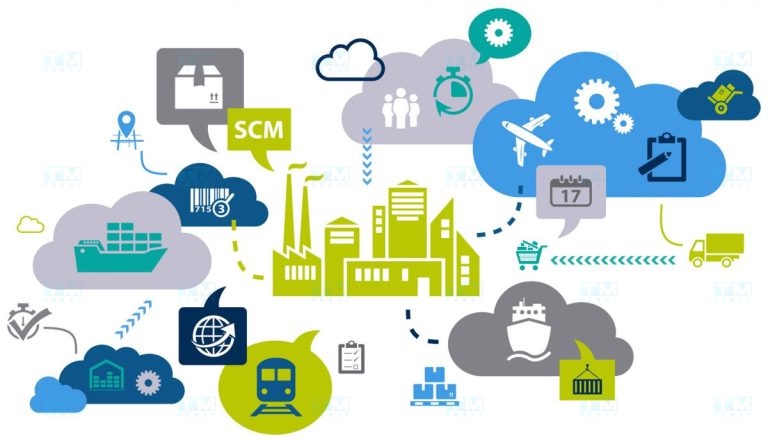
- Supply chain management systems: Exchanging order and inventory information between business partners. Tracking shipping and logistics.
- Healthcare systems: Exchanging medical records between healthcare facilities. Integration with health insurance systems.
- Ticketing and travel systems: Integration with airline and hotel booking systems. Processing payments and booking confirmations.
What is SSH? Functions and Working Principles of the SSH Protocol
Alternatives to SOAP
Although SOAP is still widely used, there are several increasingly popular alternatives:
JSON
JSON (JavaScript Object Notation) is a lightweight data format that is easy to read and parse. It is commonly used in RESTful APIs and has the following advantages:
- Simple and easy to understand
- Higher performance due to smaller size
- Integrates well with JavaScript and modern programming languages
gRPC
gRPC is a high-performance RPC (Remote Procedure Call) framework developed by Google. It uses Protocol Buffers as the interface description language and data exchange format. Advantages of gRPC include:
- High performance and low latency
- Bidirectional streaming support
- Automatic code generation for multiple programming languages
GraphQL
GraphQL is a query language and runtime for APIs, developed by Facebook. It allows clients to specify exactly the data they need. Advantages of GraphQL include:
- Flexibility in data querying
- Minimizes over-fetching and under-fetching of data
- Provides a self-describing schema
Conclusion: SOAP remains an important protocol for enterprise systems that require high security and complex transaction processing. With the growing popularity of REST and gRPC, the choice of protocol depends on specific requirements -- SOAP for enterprise legacy and finance, REST for web APIs and microservices.